English
 Arabic
 French
 Spanish
 Portuguese
 Deutsch
 Turkish
 Dutch
Dutch
 Italiano
 Russian
 Romaian
 Portuguese (Brazil)
 Greek
Greek
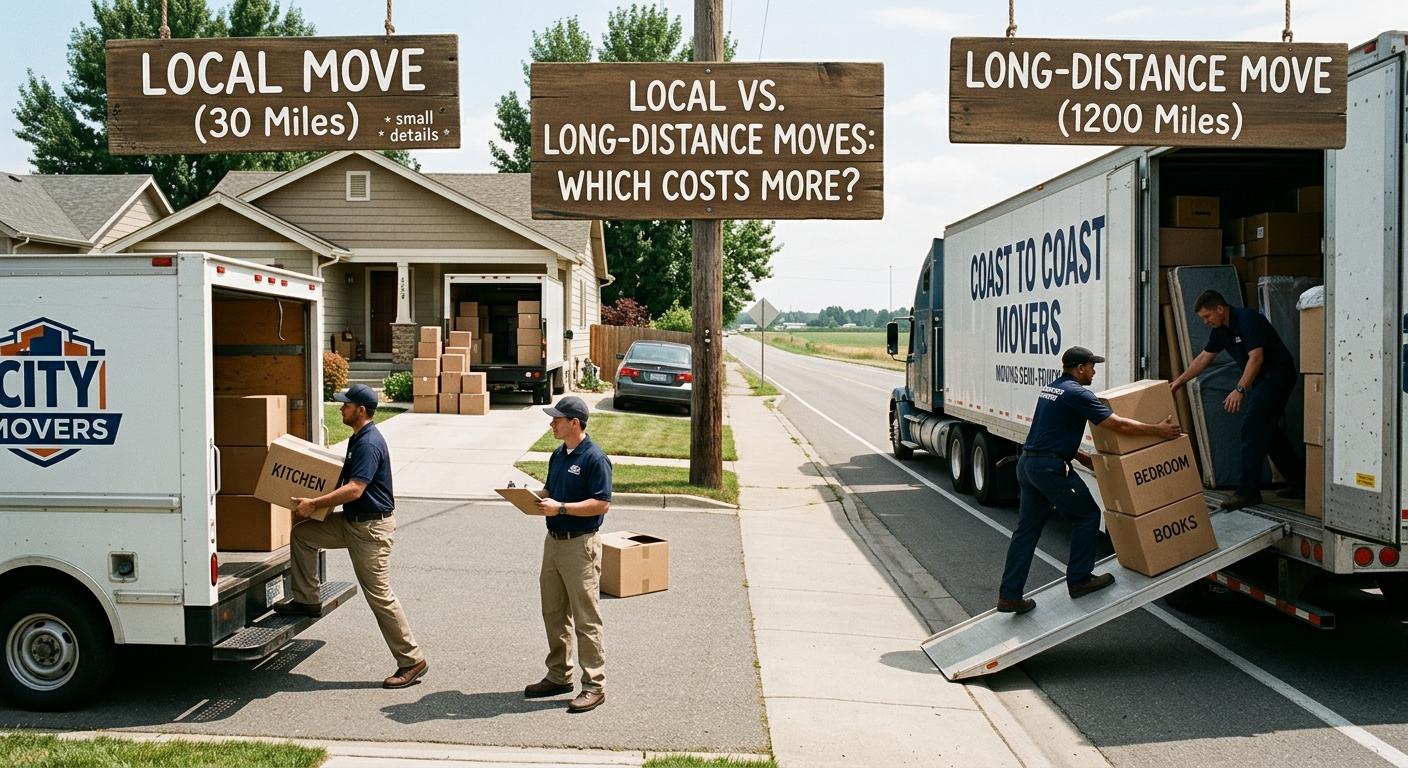
Moving across town and relocating to another state can involve many of the same tasks, but the costs can be surprisingly different. The distance, size of the household, labor requirements, and services selected all influence the final moving bill. Understanding how local and long-distance moving costs are calculated helps households plan their relocation without unexpected financial pressure.
Understanding the Difference Between Local and Long-Distance Moves
Before comparing prices, it helps to understand how moving companies classify different types of relocations.
A local move generally takes place within the same city or surrounding area. Many moving companies consider relocations within 50 miles to be local, although the exact definition varies by company and state regulations.
Long-distance moves typically cover greater distances, often crossing state lines. Interstate moves are subject to federal transportation regulations, which can affect how estimates, contracts, and moving services are handled.
The distinction matters because local and long-distance moving companies often use different pricing structures.
Resources such as My Moving Journey help households explore moving companies, compare relocation options, and understand the services available for different types of moves.
How Local Moving Companies Calculate Their Prices
Local movers generally charge an hourly rate based on the number of workers and trucks required.
For example, a two-person moving crew may charge an hourly rate that covers loading, transportation, and unloading.
The total cost depends on several factors:
-
Number of movers required.
-
Hours spent packing, loading, and unloading.
-
Distance between the two properties.
-
Size and accessibility of the home.
-
Additional services, such as furniture assembly or packing.
A local move that takes four hours will usually cost less than one requiring an entire day, even when both relocations cover approximately the same distance.
How Long-Distance Moving Companies Calculate Their Prices
Long-distance moving companies commonly calculate prices using shipment weight or volume, transportation distance, and additional services.
For interstate household moves, the pricing method depends on the mover's tariff and the type of estimate provided.
Unlike local moves, where labor hours often account for a large portion of the bill, long-distance relocations involve additional transportation expenses.
Fuel, driver wages, vehicle maintenance, insurance, and delivery logistics can all influence the final price.
A household moving 1,000 miles will generally face higher transportation costs than a household moving 100 miles with a comparable shipment.
However, distance alone does not determine the final bill.
Local vs. Long-Distance Moving Costs: A Price Comparison
Long-distance moves generally cost more in total because they require additional transportation, labor, and logistical planning.
However, the price difference depends heavily on household size and the services included.
A small interstate move may cost less than a large local relocation involving extensive packing, specialty furniture, and several days of labor.
The following estimates illustrate how costs can vary.
| Moving Type | Estimated Cost |
| Small local move | $400–$1,000 |
| Two-bedroom local move | $800–$2,000 |
| Large local move | $1,500–$3,500+ |
| Small long-distance move | $1,500–$3,500 |
| Two-bedroom long-distance move | $3,000–$6,000 |
| Large long-distance move | $5,000–$10,000+ |
These are illustrative planning ranges rather than guaranteed market prices. Actual quotes depend on the moving company, route, shipment size, season, and services requested.
Why Long-Distance Moves Usually Cost More
Long-distance moving expenses extend beyond loading belongings onto a truck.
A relocation covering several states may require additional driving days, overnight stops, fuel, and coordination between transportation teams.
Some moving companies also consolidate multiple customers' shipments onto the same truck. This arrangement can reduce transportation expenses but may create longer delivery windows.
A dedicated moving truck generally offers more control over scheduling, although it may cost more.
Local moves usually involve fewer transportation expenses because the truck and moving crew can complete the relocation within a shorter period.
What Factors Affect Local Moving Costs?
Local moving expenses are closely connected to the amount of time required to complete the relocation.
Two households moving the same distance may receive very different quotes because their properties, belongings, and service requirements differ.
Household Size and Number of Belongings
A studio apartment usually requires fewer movers and less loading time than a four-bedroom house.
Larger households may need additional crew members, larger trucks, or multiple trips.
Furniture dimensions also matter. Bulky sofas, wardrobes, and appliances can increase loading time, particularly when movers must navigate narrow staircases or hallways.
Reducing unnecessary belongings before moving day can help limit labor requirements.
Property Accessibility
The physical layout of a property can significantly affect local moving costs.
For example, moving furniture from a third-floor apartment without an elevator takes more time than loading belongings from a ground-floor home.
Other accessibility challenges include:
-
Long distances between the property and moving truck.
-
Limited parking near the entrance.
-
Narrow staircases or hallways.
-
Building restrictions on moving hours.
-
Elevator reservations and loading dock requirements.
Some companies charge additional fees for stairs, long carries, or difficult access. These charges should be discussed before the move.
Hourly Rates and Minimum Charges
Many local movers require a minimum booking period, often two or three hours.
A household may still pay the minimum charge even when the actual move takes less time.
Travel time can also affect the bill. Some companies charge for the time required to reach the pickup location or return to their operating base.
Reviewing the company's hourly rate, minimum booking period, and travel charges helps prevent misunderstandings.
What Factors Affect Long-Distance Moving Costs?
Long-distance relocations involve more variables because the moving company must transport belongings over a greater distance.
The shipment's size, delivery requirements, and transportation method can significantly affect the estimate.
Shipment Weight and Moving Distance
Shipment weight is an important pricing factor for many interstate moving companies.
A household transporting 2,000 pounds of belongings may receive a considerably lower quote than one transporting 8,000 pounds over the same route.
The total distance also matters because longer journeys generally require more fuel, driving time, and vehicle maintenance.
According to the Federal Motor Carrier Safety Administration (FMCSA), consumers should understand whether their interstate moving estimate is binding or non-binding before signing an agreement.
A binding estimate establishes the price for the listed shipment and services, subject to applicable changes and additional services. A non-binding estimate is not a guaranteed final price.
Delivery Windows and Storage Requirements
Long-distance moves may involve flexible delivery schedules, especially when shipments are consolidated.
Households requiring a specific delivery date or dedicated transportation may face additional charges.
Storage can also increase expenses when the new property is not ready for occupancy.
Storage-in-transit services may involve handling fees, warehouse charges, and additional transportation costs.
These expenses should be included in the initial budget rather than treated as unexpected additions.
How to Build a Realistic Moving Budget
A moving budget should account for more than the initial quote.
Packing supplies, insurance options, transportation, temporary accommodation, and utility deposits can all contribute to relocation expenses.
A household planning an interstate move may also need to budget for meals, fuel, and overnight accommodation while traveling to its new home.
Using a moving budget guide can help estimate relocation expenses and compare the potential costs of different moving arrangements before requesting formal quotes.
A practical budget should separate essential moving expenses from optional services.
Essential Moving Expenses
The following costs should be considered when planning either type of move:
-
Moving company charges or truck rental.
-
Packing boxes, tape, and protective materials.
-
Transportation and fuel.
-
Basic liability coverage or additional valuation protection.
-
Utility connection fees and deposits.
-
Cleaning and other property-related expenses.
For long-distance moves, households should also account for travel expenses and possible temporary accommodation.
Optional Services That Increase the Bill
Professional packing, furniture disassembly, storage, and specialty-item transportation can make moving more convenient.
However, these services can increase the total cost.
For example, a household that hires movers to pack every room will generally pay more than one that prepares its belongings independently.
The additional expense may be worthwhile for households with limited time, fragile possessions, or large amounts of furniture.
The decision should depend on the available budget and the practical requirements of the relocation.
Hidden Moving Costs That Can Affect Both Types of Moves
Even a carefully planned relocation can become more expensive when certain charges are overlooked.
Some additional expenses apply to both local and long-distance moves, while others are more common during interstate transportation.
Packing Materials and Specialty Items
Standard moving estimates may not include every packing material or specialty service.
Items such as pianos, large safes, antiques, and oversized furniture may require special equipment or additional workers.
Fragile belongings may also need custom crating or specialized packing.
Households should identify these items during the estimate process so the moving company can account for them.
Additional Handling and Transportation Fees
Moving companies may apply additional charges when normal loading or delivery arrangements are not possible.
For example, a large moving truck may be unable to access a narrow residential street.
In that situation, movers may need to transfer belongings to a smaller vehicle, resulting in a shuttle service fee.
Other possible charges include long-carry fees, additional stops, storage, and waiting time.
Requesting an itemized estimate helps households identify these potential expenses before moving day.
Is Moving Yourself Cheaper Than Hiring Professional Movers?
A do-it-yourself move can reduce labor expenses, particularly for smaller local relocations.
However, renting a truck does not eliminate every moving cost.
Truck rental, fuel, mileage charges, insurance, equipment, and packing supplies must still be considered.
Long-distance DIY moves can also involve hotel stays, meals, tolls, and additional travel time.
When a DIY Move Makes Financial Sense
A DIY move may be practical when a household has relatively few belongings and access to reliable help.
For example, moving the contents of a small apartment across town may require only a rental truck and several hours of loading.
However, large furniture and heavy appliances create additional safety and logistical challenges.
Professional movers may be more practical when the relocation involves multiple floors, valuable belongings, or limited assistance.
Comparing the Full Cost of Both Options
The lowest advertised price is not always the lowest total cost.
A rental truck may appear inexpensive until mileage, fuel, equipment, and additional rental days are included.
Similarly, a professional moving estimate may initially appear higher but include transportation equipment, loading labor, and basic liability coverage.
Comparing the complete cost of each option provides a more accurate picture of the financial commitment.
How to Save Money on Local and Long-Distance Moves
Moving costs cannot always be reduced substantially, but careful planning can help households avoid unnecessary expenses.
The most effective savings opportunities often involve reducing shipment size, comparing estimates, and selecting the right moving date.
Compare Multiple Moving Estimates
Obtaining at least three written estimates gives households a clearer understanding of available pricing.
Each estimate should describe the services included, additional charges, and applicable terms.
For interstate relocations, consumers can use the FMCSA's mover registration and safety resources to verify whether a company has the required federal operating authority.
Comparing estimates based on the same inventory and service requirements helps identify meaningful price differences.
Reduce the Size of the Shipment
Moving fewer belongings can reduce packing requirements, loading time, and transportation costs.
This is particularly relevant for long-distance relocations where shipment weight or volume influences pricing.
Selling, donating, or recycling items that are no longer needed can help reduce the total shipment.
However, households should consider replacement costs before disposing of furniture or appliances.
Replacing an expensive item after moving may cost more than transporting it.
Choose the Moving Date Carefully
Moving demand often increases during summer, weekends, and the beginning or end of the month.
The U.S. Census Bureau's American Community Survey tracks residential mobility, while industry reports consistently identify seasonal fluctuations in moving activity.
Higher demand can affect moving company availability and pricing.
Households with flexible schedules may find more options by requesting quotes for weekdays or less popular moving periods.
Booking early also provides more time to compare companies and coordinate moving arrangements.
Local vs. Long-Distance Moves: Which Is More Expensive?
Long-distance moves generally involve higher total expenses because they require more transportation, fuel, driving time, and logistical coordination.
Local moves usually cost less because they cover shorter distances and are often completed within a single day.
However, a large local relocation involving several movers, specialty packing, and difficult property access can cost more than a small interstate shipment.
The total cost ultimately depends on the household's inventory, moving distance, service requirements, and scheduling flexibility.
Rather than comparing distance alone, households should evaluate the complete moving estimate and identify which services are included.
Final Thoughts
Local and long-distance moves have different pricing structures, but both require careful financial planning.
Local moving costs are often driven by labor hours, crew size, and property accessibility, while long-distance expenses depend more heavily on shipment size, transportation distance, and delivery arrangements.
Comparing written estimates, reducing unnecessary belongings, and accounting for additional services can help households manage their relocation expenses.
A realistic moving budget allows households to choose an arrangement that fits their needs without overlooking the costs that can arise before, during, and after moving day.