 English
 Arabic
 French
 Spanish
 Portuguese
 Deutsch
 Turkish
 Dutch
Dutch
 Italiano
 Russian
 Romaian
 Portuguese (Brazil)
 Greek
Greek
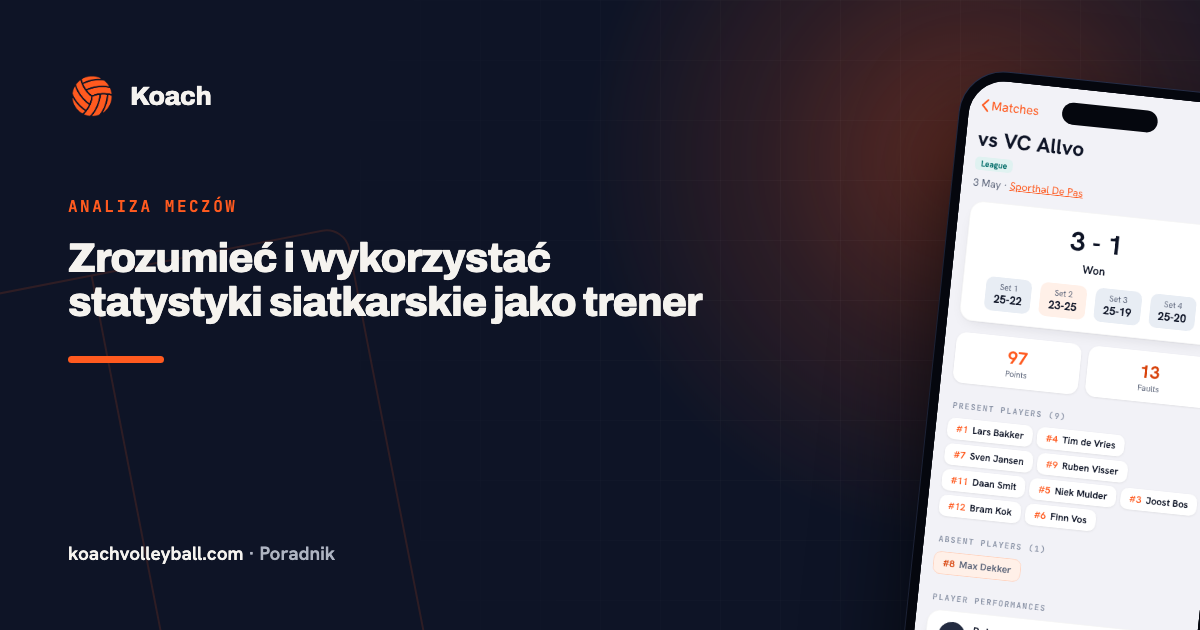
Every volleyball match tells a story, but that story isn't always obvious from the final score. A close loss might hide a strong performance in most rotations, while a comfortable win might mask a worrying weakness. Match analysis helps coaches understand what really happened. For Polish volleyball teams without dedicated analysts, statistics tools make this analysis practical. In this article we look at how Koach's statistics tools help coaches analyze matches, from recording data to spotting patterns and turning insights into better lineups and training sessions.
Recording Data That Matters
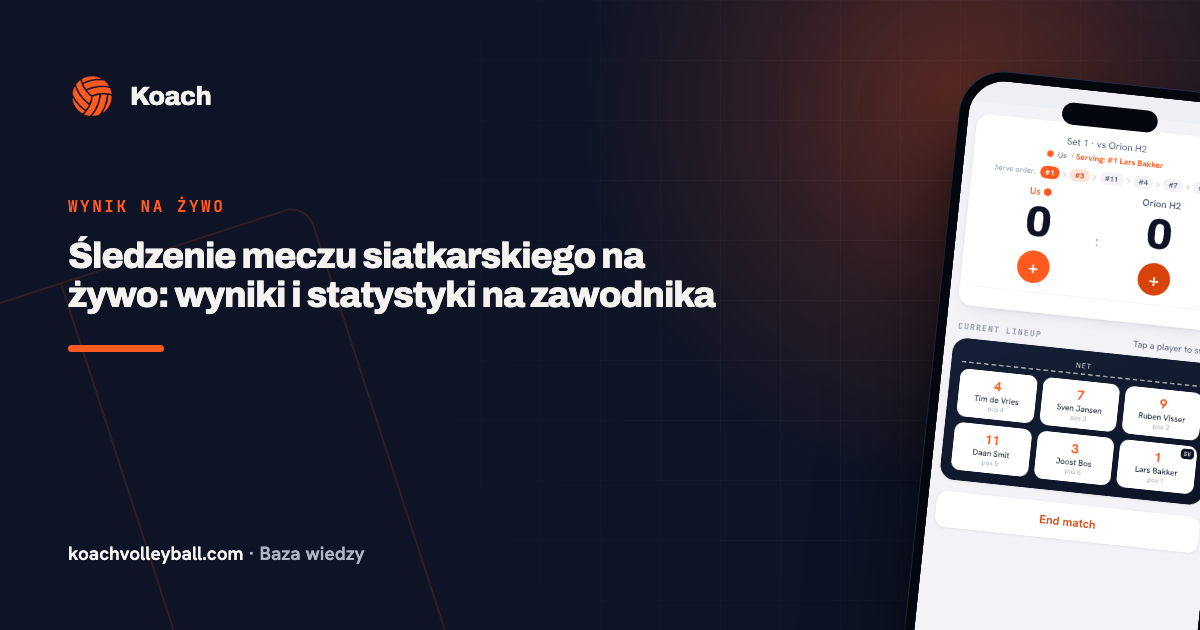
Analysis starts with good data. During the match, coaches or assistants record key actions such as serves, passes and attacks. Each action is linked to a player and rotation, which makes the data much more useful later. Polish coaches who want to see how this recording works before trying it in a match can find an overview at www.koachvolleyball.com, where the statistics tools are explained alongside lineups and training plans. Keeping the recording focused on the stats that matter most makes it realistic for club coaches with limited time and no analyst. Agreeing on simple definitions, such as what counts as a good pass, keeps the data consistent even when different people record it during the season.
Seeing the Big Picture
After the match, start with the big picture. How many points did your team win through its own actions, like kills, aces and blocks, and how many did it give away through errors? This simple comparison often explains the result. A team that loses with many unforced errors knows exactly what to work on. A team that loses despite few errors may need more attacking power or serving pressure. Understanding this balance helps you set priorities for the next week of training and gives you a clear message to share with your players. It also helps to look at runs of points, because a string of errors in one rotation often explains why a close set slipped away.
Analyzing Each Rotation
Rotation analysis is one of the most valuable insights statistics tools provide. Most teams have one or two rotations where they consistently lose points. Identifying these helps you understand why. It might be a weaker passer exposed in serve receive, a setter with a difficult path to the target or a lack of attacking options when the setter is in the front row. Once you know the cause, you can adjust your lineup or plan targeted training. This kind of analysis is almost impossible to do reliably from memory while also coaching the match.
Understanding Individual Contributions
Statistics tools also show individual performance. Passing averages, serve success and attack efficiency reveal how each player contributes. It's important to interpret these numbers with context, considering factors such as the difficulty of serves received or the quality of sets. Used thoughtfully, individual stats support constructive conversations with players. They highlight progress and show clearly where improvement is needed. Players usually appreciate this evidence-based feedback, because it feels fairer and more specific than general comments made in the emotional moments after a match. Comparing the same rotation across several matches is especially revealing, because a problem that appears every week deserves your training time first.
From Analysis to Improvement
The final step is turning analysis into improvement. Choose two or three priorities based on what the data shows. Build training sessions around them, adjust your lineup if certain rotations need strengthening and check the stats after the next match to see whether the changes worked. This cycle of analysis, action and review helps teams improve steadily throughout the season. Koach's statistics tools connect with rosters, lineups and training plans, making the whole process smooth. For Polish volleyball teams, match analysis becomes a practical, everyday part of coaching rather than a luxury reserved for professional clubs.


