 English
 Arabic
 French
 Spanish
 Portuguese
 Deutsch
 Turkish
 Dutch
 Italiano
 Russian
 Romaian
 Portuguese (Brazil)
 Greek
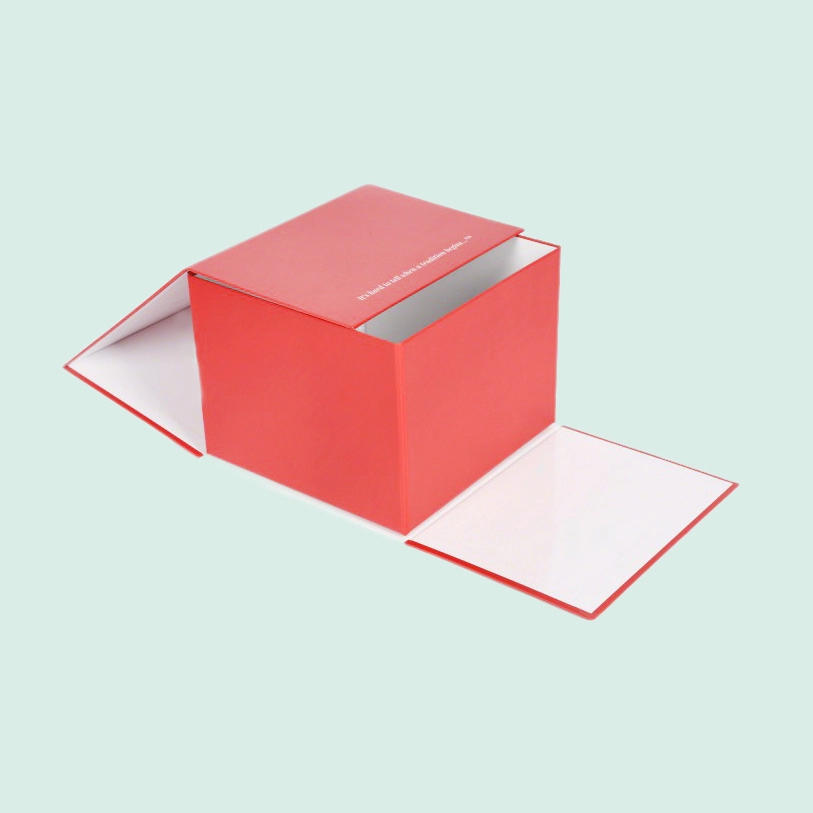
There is something quietly satisfying about a box that arrives flat and transforms into a polished gift package in seconds. It feels almost like a small magic trick. Yet behind that moment lies a carefully planned journey, starting with raw paper and board in a factory and ending with a finished presentation in a customer's hands. Each step, from design to assembly, affects how the final box looks and performs. Tracing this path reveals why flat-pack packaging has become so popular and how thoughtful engineering turns a simple sheet of printed board into a structure that feels substantial, attractive, and ready for gifting.
Designing for Flatness and Function
The journey begins on the drawing board, where designers face a unique constraint: the box must fold completely flat yet reassemble into a strong, attractive shape. This requires clever structural planning. Panels are arranged so they collapse neatly, while hinges and locking features keep everything secure once opened. Dimensions must match the product precisely, with allowances for inserts and wrapping thickness. A digital dieline maps every cut and crease. Engineers often build physical prototypes to test how the box folds and unfolds. Getting this stage right is crucial, because errors in geometry cannot easily be fixed once thousands of sheets have been printed.
Printing, Coating, and Finishing the Sheets
Once the design is approved, production begins with printing. Large sheets are fed through offset presses that lay down brand colors, patterns, and graphics. After printing, sheets may receive lamination, varnish, or special coatings that protect the surface and create the desired finish. Foil stamping, embossing, and spot gloss add decorative details. Each step requires careful control of temperature, pressure, and alignment, since even a slight shift can ruin the look. Operators check sample sheets regularly against color standards. By the end of this stage, a plain sheet has become a colorful, textured surface ready to be cut and shaped into its final form.
Cutting, Wrapping, and Assembling Components
The printed sheets then move to die-cutting, where steel blades cut and score the board into the precise shapes defined by the dieline. Rigid structures are built by wrapping decorative paper around board panels, smoothing out air bubbles and trimming edges. Hinges, magnets, and ribbons are attached according to the design. In a foldable gift box, the components are arranged so they can lie flat for packing but quickly pop open when needed. Skilled workers and machines cooperate closely here, as consistent glue application and accurate alignment determine whether the box looks sharp or sloppy. Every finished component is inspected before moving on.

Packing for Efficient Transport
Flat-pack design pays off most during shipping. Boxes are stacked neatly, bundled, and placed in sturdy export cartons that protect corners and surfaces. Because they take up little room, many more units fit in each carton and each shipping container, lowering freight cost per box. Cartons are labeled with quantities and product information to simplify warehouse handling. Moisture protection can be added for long sea journeys. Proper packing is more important than people realize, since even a perfectly made box can arrive damaged if cartons are weak or overloaded. This is where practical experience separates dependable factories from careless ones.
Assembly at Your End and the Final Reveal
When cartons reach the brand, assembly is refreshingly simple. Staff can unfold each box in seconds, with no tools or special training. Items are placed inside, perhaps with tissue paper or a printed card, and the package is ready to ship or gift. Because boxes are assembled only as needed, brands can store large quantities without sacrificing space. Seasonal rushes become far easier to manage. The customer then sees only the finished product, unaware of the many stages behind it. That seamless final impression is the reward of a well-planned journey, where thoughtful design, careful production, and efficient logistics all come together invisibly.


