English
 Arabic
 French
 Spanish
 Portuguese
 Deutsch
 Turkish
 Dutch
 Italiano
 Russian
 Romaian
 Portuguese (Brazil)
 Greek
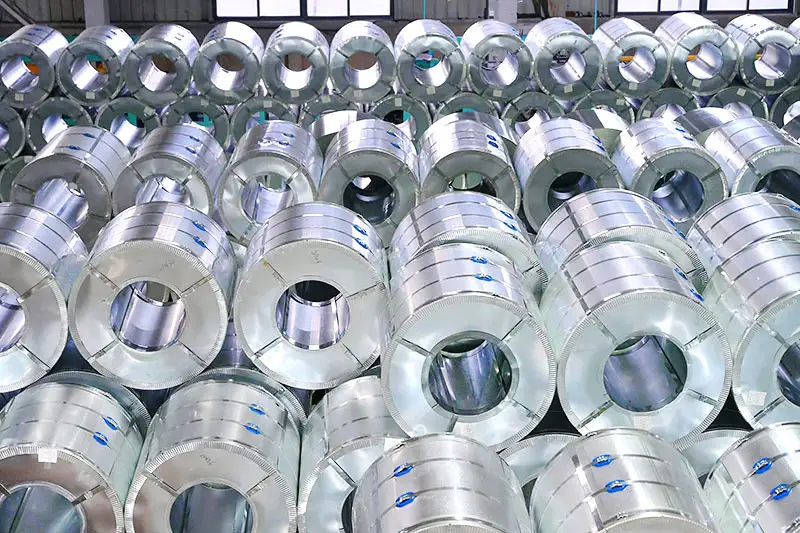
Coating thickness and surface quality are the two measures by which galvanized steel is judged in the marketplace. A coil with uneven zinc distribution or visible surface defects will struggle to find buyers, no matter how strong the underlying steel might be. The challenge is that both properties are decided in a matter of seconds as the strip leaves the molten zinc bath, where temperature, speed, and airflow all interact at once. HiTo Engineering has devoted considerable design attention to this precise moment, building lines that hold coating weight within tight tolerances and deliver surfaces that satisfy demanding customers. This article explains the mechanisms and design choices that make that control possible.
Why Thickness Control Is Harder Than It Looks
It is tempting to assume that dipping steel in zinc produces a predictable coating, but the reality is far messier. The amount of zinc that clings to the strip depends on bath temperature, immersion time, withdrawal speed, strip surface condition, and the wiping action applied as the strip emerges. Each of these variables influences the others, so adjusting one without accounting for the rest creates new problems elsewhere. Coating that is too thick wastes zinc and can crack during forming, while coating that is too thin leaves the steel under-protected. HiTo Engineering approaches thickness control as a multivariate problem, designing systems that manage all the interacting factors together rather than treating them as separate adjustments.
The Air Knife as the Primary Control Tool
The air knife is the workhorse of coating thickness control on a continuous line. Positioned just above the zinc pot, it directs a precise jet of air or nitrogen across both surfaces of the strip, wiping away surplus zinc and leaving the desired coating weight behind. The pressure, angle, and distance of the knives all affect the result, and modern systems adjust these parameters automatically as line speed changes. HiTo Engineering specifies air knife assemblies with fine adjustment and stable gas supply, because even small fluctuations in jet pressure produce visible thickness variations across the strip width. Getting this device right is arguably the single most important factor in achieving consistent coating weight.
Managing Line Speed and Bath Conditions Together
Air knives do not operate in isolation; their effectiveness depends on stable conditions upstream. Line speed determines how long the strip spends in the zinc and how quickly it passes the knives, so speed changes ripple directly into coating weight unless the knives compensate. Bath temperature and chemistry likewise shift the zinc's viscosity and the alloying reaction at the steel interface. HiTo Engineering integrates speed, temperature, and knife control into a coordinated system, so that when an operator changes line speed, the other parameters follow automatically rather than requiring manual correction. This coordination prevents the drift that plagues lines where each variable is adjusted independently.

Strip Condition and Its Effect on Coating Uniformity
The condition of the steel entering the zinc bath shapes how evenly zinc adheres across the surface. Residual contamination, variations in surface roughness, and inconsistent annealing all create local differences in wettability, which show up later as patches of thicker or thinner coating. HiTo Engineering addresses this by maintaining rigorous control through pretreatment and annealing, ensuring the strip arrives at the pot in a uniform, reactive state. Strip flatness and tension also matter, since a strip that wanders or ripples passes the air knives at varying distances, producing thickness bands. Stable strip handling therefore contributes directly to coating consistency, even though it happens well before the zinc pot.
Suppressing Surface Defects Before They Form
Surface quality problems such as dross marks, pinholes, streaks, and zinc splashes each have specific causes, and good line design attacks those causes rather than inspecting defects after the fact. Dross, for instance, forms when zinc-iron particles accumulate in the bath, so HiTo Engineering designs pot entry and skimming arrangements that keep dross away from the strip path. Splashes are controlled through careful pot geometry and knife positioning, while streaks often trace back to uneven knife jets or contaminated strip. Ventilation and atmosphere management also influence surface appearance, particularly brightness. Each defect category receives targeted attention in the design, which reduces reliance on end-of-line sorting.
Inline Measurement and Feedback Loops
No matter how well a line is designed, conditions change, and the ability to detect drift quickly separates good operations from struggling ones. HiTo Engineering incorporates inline coating weight gauges that scan across the strip width and report measurements continuously, allowing operators to spot trends before they become rejections. Surface inspection systems using cameras and lighting detect defects in real time, marking their location for later trimming. This measurement data feeds back into the control system, which can adjust air knife settings or flag the pot for attention. The result is a line that corrects itself continuously rather than discovering problems only at final inspection.
Quality That Customers Can See and Measure
Coating thickness and surface quality are ultimately customer-facing properties, and lines that control them well earn lasting reputations. Buyers of hot dip galvanizing line coil check coating weight against standards and inspect surfaces before accepting shipments, so consistency directly affects commercial relationships. HiTo Engineering's emphasis on integrated control, from strip preparation through inline measurement, reflects the understanding that quality is built into the process rather than inspected into the product. Producers running such lines spend less time on disputes and rework, and more time serving customers who return because they know exactly what they will receive with every coil.