 English
 Arabic
 French
 Spanish
 Portuguese
 Deutsch
 Turkish
 Dutch
 Italiano
 Russian
 Romaian
 Portuguese (Brazil)
 Greek
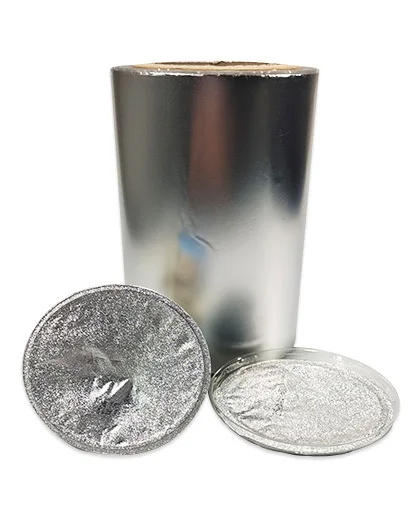
A lidding foil that seals perfectly but looks generic is a missed opportunity. The lid is often the first thing a consumer touches and the last thing they see before the product disappears into a cupboard or fridge, which makes it prime branding territory. Customization turns a functional barrier into a marketing asset, and it also solves practical problems, from fitting unusual container shapes to improving the opening experience. HARDVOGUE offers customization across three main areas, and understanding how printing, die-cutting, and embossing work together helps brands get more from every square centimetre of foil.
Customization Begins With the Product Brief
Before any plate is cut or cylinder engraved, HARDVOGUE works with customers to establish what the aluminium lidding foil needs to achieve. A premium dessert may prioritise visual impact and tactile quality, while a high-volume yogurt may prioritise cost efficiency and print speed. Some products need lids that fit unusual tray geometries, and others require features like easy-open tabs or venting. The brief also covers practical constraints such as the container material, sealing conditions, and distribution environment. Getting these requirements clear at the outset prevents costly revisions later, and it ensures that the customization effort focuses on elements that genuinely add value rather than decoration for its own sake.
Printing Options That Bring Brands to Life
Printing transforms the surface of the foil into a communication channel, and HARDVOGUE supports the methods that suit different volumes and design complexities. Flexographic printing offers efficient production for moderate and long runs with solid colours, text, and straightforward graphics. Gravure printing delivers exceptional detail and colour consistency for high-volume campaigns with intricate artwork. In both cases, the metal surface requires appropriate preparation through primers and topcoats so that inks adhere properly and colours read as intended. HARDVOGUE advises on artwork adjustments for the metallic background, helping brands achieve the look they designed for rather than discovering unwanted shifts after production.
Die-Cutting for Precise Shapes and Formats
Not every lid is a simple circle or rectangle, and die-cutting allows foil to be produced in the exact shape a container requires. Custom dies can create lids for oval trays, shaped dessert pots, and multi-compartment packs, as well as features such as pull tabs and tear initiation points that make opening easier. HARDVOGUE coordinates die design with the customer's sealing equipment, since a lid that fits the container but misaligns on the line creates problems rather than solving them. Precision in die-cutting also affects seal consistency, because an irregular edge can leave areas of the rim uncovered and vulnerable to leaks.
Embossing for Texture, Stiffness, and Shelf Presence
Embossing adds a third dimension to the lid, pressing patterns or branding into the foil to create visual and tactile effects. On the shelf, embossed lids catch the light and feel more substantial in the hand, which supports premium positioning. Beyond aesthetics, embossing can increase stiffness, helping larger lids resist bending during sealing and handling. HARDVOGUE produces embossed foils with a range of patterns and works with brands to align the texture with their identity. The company also ensures that embossing does not interfere with seal performance, since texture in the wrong place can prevent uniform lacquer contact with the container rim.

Combining Techniques for Cohesive Results
The most effective customization usually combines all three techniques rather than treating them separately. A lid might be printed in full colour, die-cut into a distinctive shape, and embossed with a subtle pattern that reinforces the brand, with each element supporting the others. HARDVOGUE approaches these projects as integrated design challenges, checking that printing, cutting, and embossing work together without compromising the seal or the barrier. When techniques are combined carelessly, problems emerge, such as embossing that distorts printed registration or die-cut edges that interfere with the seal zone. Coordinated development avoids these conflicts.
Testing Customized Foil Before Full Production
Customization introduces variables that standard foil does not have, and testing becomes more important as a result. HARDVOGUE supplies customized samples so customers can run trials on their actual equipment with their actual containers. These trials reveal whether the die-cut shape aligns correctly, whether embossing affects sealing, and whether printed surfaces hold up through handling. Adjustments can then be made before plates, cylinders, or dies are finalised for full production. This step adds a little time to the development process but prevents the far greater cost of discovering a problem after thousands of customized lids have been manufactured.
Why Customization Pays Off With HARDVOGUE
Customization is an investment, and like any investment it should deliver a return. A well-designed lid strengthens brand recognition on crowded shelves, improves the opening experience, and can even reduce material use by allowing shapes that fit containers more efficiently. HARDVOGUE's role is to help customers capture these benefits without compromising the functional fundamentals of sealing and barrier protection. By treating printing, die-cutting, and embossing as parts of a single design problem, the company enables brands to create lids that work beautifully and look the part, turning a small piece of packaging into a genuine competitive advantage.

