 English
 Arabic
 French
 Spanish
 Portuguese
 Deutsch
 Turkish
 Dutch
Dutch
 Italiano
 Russian
 Romaian
 Portuguese (Brazil)
 Greek
Greek
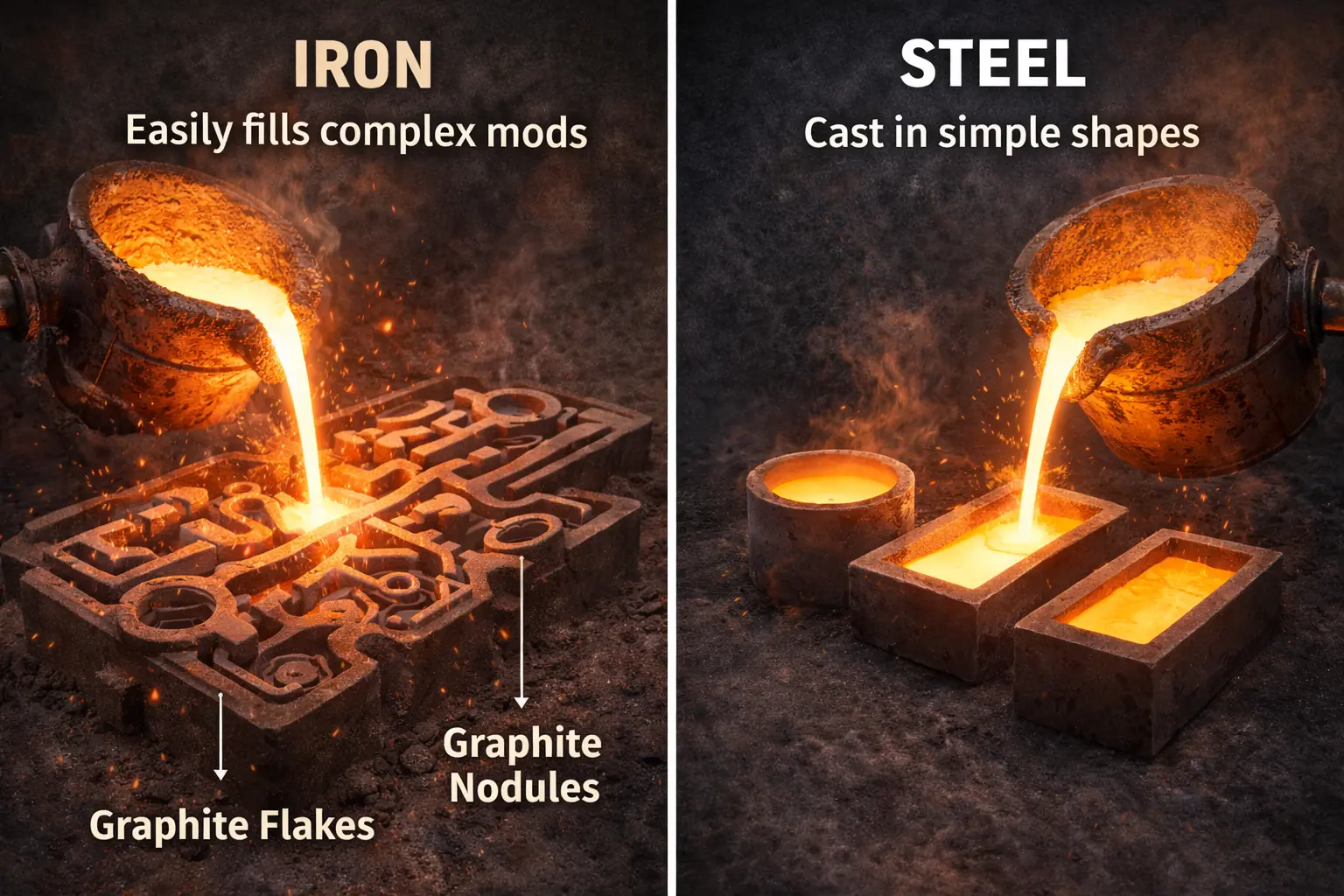
Cast iron and steel are two of the most important materials in modern engineering, construction, automotive manufacturing, and industrial production. Both are iron-based alloys, yet they differ significantly in composition, mechanical properties, and real-world applications. The ongoing comparison of cast iron and steel remains highly relevant for engineers, manufacturers, and designers who aim to select the most suitable material for strength, durability, cost, and performance.
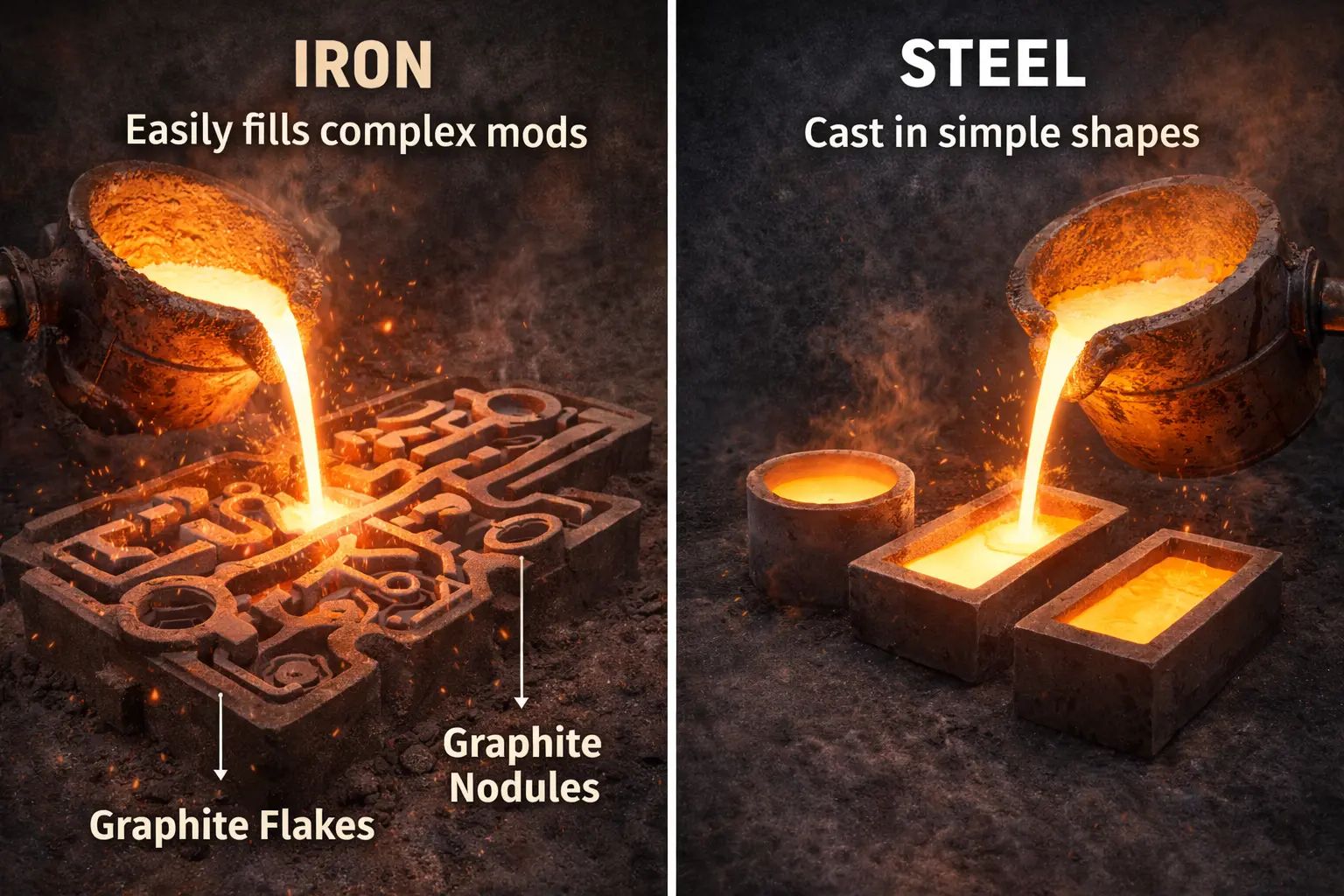
These two materials have shaped industrial development for centuries. While steel is known for its strength, flexibility, and wide usability, cast iron is valued for its hardness, wear resistance, and excellent casting ability. Understanding the differences between cast iron and steel is essential for making informed decisions in material engineering and structural design.
Cast Iron and Steel in Industrial Engineering Applications
cast iron and steel are widely used across industrial engineering sectors due to their distinct mechanical characteristics. Steel is produced with a lower carbon content, typically less than 2%, which gives it superior tensile strength and ductility. This makes steel highly suitable for applications that require flexibility and resistance to dynamic loads.
Cast iron, on the other hand, contains a higher carbon content, generally between 2% and 4%, which gives it a rigid and brittle structure. This composition allows cast iron to be easily molded into complex shapes during the casting process, making it highly cost-effective for mass production.
In engineering applications, steel is commonly used for structural frameworks, bridges, high-rise buildings, and automotive components where strength and flexibility are critical. Cast iron is often used in machine bases, engine blocks, pipes, and heavy-duty equipment where vibration damping and compressive strength are more important than flexibility.
The use of cast iron and steel together in industrial systems is very common, as each material complements the other’s weaknesses. Steel provides structural strength, while cast iron enhances stability and wear resistance in mechanical systems.
Cast Iron and Steel Mechanical Properties and Performance Behavior
The mechanical properties of cast iron and steel differ significantly due to their internal structure and carbon distribution. Steel is known for its high tensile strength, toughness, and ductility. It can withstand bending, stretching, and impact forces without breaking, making it suitable for dynamic and load-bearing applications.
Cast iron, in contrast, offers excellent compressive strength but lower tensile strength. This means it performs well under static loads but can fracture under sudden impact or tension. However, cast iron has superior vibration-damping properties, which makes it ideal for machinery bases and engine components where noise reduction and stability are important.
Thermal behavior also plays a significant role in distinguishing cast iron and steel. Cast iron has better heat retention and thermal conductivity, making it suitable for applications such as cookware and engine components. Steel, while more resistant to thermal shock, does not retain heat as effectively but performs better under fluctuating temperature and stress conditions.
Machinability is another key difference. Cast iron is easier to machine due to its graphite content, which acts as a natural lubricant during cutting operations. Steel, depending on its grade, may require more advanced machining techniques and specialized tools due to its higher strength and toughness.
Cast Iron and Steel in Automotive and Construction Industries
Cast iron and steel both play a crucial role in automotive manufacturing. Steel is widely used in vehicle bodies, chassis, suspension systems, and safety components due to its high strength-to-weight ratio and ability to absorb impact energy. Modern automotive design heavily relies on steel alloys to ensure passenger safety and vehicle performance.
Cast iron is commonly used in engine blocks, brake discs, and cylinder heads because of its excellent wear resistance and vibration-damping properties. These characteristics help improve engine durability and reduce operational noise. Cast iron engine components are known for their long service life and ability to withstand high temperatures.
In construction, steel is the backbone of modern infrastructure. It is used in beams, columns, reinforcement bars, and structural frameworks due to its strength and flexibility. Steel allows architects and engineers to design tall buildings and long-span bridges that can withstand environmental stresses such as wind and seismic activity.
Cast iron is also used in construction, particularly in drainage systems, pipelines, and decorative architectural elements. Its ability to resist corrosion and handle compressive loads makes it suitable for underground and load-bearing applications.
The combination of cast iron and steel in industrial systems ensures a balance between strength, stability, and cost efficiency, making both materials indispensable in large-scale engineering projects.
Cast Iron and Steel Durability, Cost, and Industrial Selection Factors
Durability is a key factor when comparing cast iron and steel. Steel generally offers higher durability in high-stress and dynamic environments due to its flexibility and resistance to fracture. It can withstand repeated loading cycles without significant structural failure, making it ideal for long-term structural applications.
Cast iron provides excellent durability in low-impact environments and is highly resistant to wear and deformation under compressive forces. However, its brittleness limits its use in applications where sudden impact or tension is expected.
Cost is another important consideration. Cast iron is generally more affordable and easier to produce due to its simple casting process. This makes it suitable for large-scale manufacturing where cost efficiency is a priority. Steel, while more expensive, offers superior performance and versatility, justifying its use in critical engineering applications.
Corrosion resistance varies depending on the specific alloy composition and surface treatment. Both cast iron and steel can be enhanced with coatings, galvanization, or alloying elements to improve their resistance to environmental factors such as moisture and oxidation.
The selection between cast iron and steel often depends on a balance between performance requirements, environmental conditions, and budget constraints. Engineers carefully evaluate these factors to ensure optimal material performance in specific applications.
Conclusion: Final Insights on Cast Iron and Steel in Modern Engineering
Cast iron and steel remain two of the most essential materials in modern industrial development. Each material offers unique advantages that make it suitable for different engineering applications. Steel provides superior strength, flexibility, and impact resistance, making it ideal for structural and dynamic systems. Cast iron offers excellent compressive strength, vibration damping, and cost efficiency, making it suitable for heavy-duty and stable applications.
The comparison of cast iron and steel highlights how both materials complement each other in engineering design and manufacturing. Their combined use ensures efficiency, durability, and performance across a wide range of industries, including construction, automotive, machinery, and infrastructure development.


