 English
 Arabic
 French
 Spanish
 Portuguese
 Deutsch
 Turkish
 Dutch
Dutch
 Italiano
 Russian
 Romaian
 Portuguese (Brazil)
 Greek
Greek
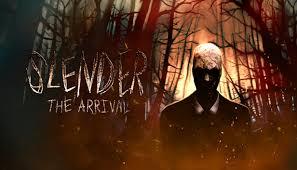
Most games are built on clarity. You’re told what to do, or at least given enough structure to figure it out. Even when things are difficult, the logic usually holds steady underneath.
Horror games sometimes keep that structure—but blur the edges of it just enough that you stop feeling confident in what the game is actually asking from you.
You see instructions.
You follow them.
And then you start wondering whether you understood them correctly in the first place.
When Guidance Feels Unstable
It often begins with something simple: a note, a prompt, a voice line, a message on a wall.
Nothing unusual at first glance. It tells you to go somewhere, do something, interact with an object. Standard game direction.
But something about it feels slightly off.
The wording is unclear. The context is missing. Or the instruction is too vague to feel fully reliable.
You follow it anyway.
Not because you’re sure—but because you don’t have a better option.
Ambiguity Becomes Part of the Mechanic
In well-defined games, ambiguity is usually temporary. You figure it out, move on, gain confidence.
In some horror games, ambiguity lingers.
You’re never entirely sure if you interpreted something correctly. A hint might have meant one thing—or something slightly different. A symbol might be warning you—or inviting you forward.
The game doesn’t correct you.
And that silence becomes its own kind of pressure.
The Fear of Misinterpretation
The real tension doesn’t come from failing an instruction.
It comes from the possibility that you haven’t realized you failed yet.
You might be progressing, but in the wrong direction. You might be interacting with objects in a way that feels correct, but isn’t. You might be triggering events without understanding why they’re happening.
That uncertainty makes every action feel provisional.
Nothing feels fully confirmed.
Instructions That Change Meaning Retroactively
One of the more unsettling techniques is when earlier instructions gain new meaning later.
A message you read hours ago suddenly feels different in hindsight. A symbol you ignored becomes important. A phrase you didn’t think much of starts to sound like a warning instead of guidance.
The game hasn’t changed the past.
But your interpretation of it has been destabilized.
And that retroactive shift creates a feeling that your understanding of the game is never final.
The Illusion of Correctness
You can do everything “right” and still feel uncertain.
The game progresses. New areas open. Events trigger. Nothing clearly tells you that you made a mistake.
But the tone of the experience doesn’t fully reassure you either.
That gap between progression and confidence is where unease settles in.
Because success without clarity doesn’t feel like success—it feels like uncertainty that hasn’t resolved yet.
When the Game Stops Explaining Itself
Some horror games gradually reduce the clarity of their instructions over time.
Early on, everything is explicit. Later, it becomes symbolic. Then fragmentary. Eventually, you’re left interpreting patterns rather than following directions.
That shift forces you to rely more on intuition than instruction.
And intuition, while powerful, is also subjective.
Two players can interpret the same clue in completely different ways and still both feel like they might be wrong.
The Weight of Unconfirmed Understanding
There’s a particular kind of discomfort that comes from acting without confirmation.
You believe you understand what to do, but the game doesn’t affirm it clearly. It simply moves forward.
That lack of validation creates lingering doubt.
You don’t know if you solved something correctly or just triggered the next stage by coincidence.
And once that doubt enters the system, every future instruction feels less reliable.
When Symbols Replace Direct Meaning
As clarity decreases, games often shift toward symbolic communication.
Shapes, colors, environmental cues, repeated motifs—things that suggest meaning rather than state it directly.
This forces interpretation.
And interpretation is never stable in horror contexts, because the atmosphere constantly pressures you to reconsider what you think you understand.
A symbol that seemed harmless earlier might suddenly feel significant later, even if nothing objectively changed.
The Stress of Constant Interpretation
Instead of simply playing, you start decoding.
Every instruction becomes a possibility rather than a directive. Every clue becomes open to revision. Every action feels like it might carry hidden consequences you don’t fully grasp.
That mental workload is subtle but persistent.
You’re not just reacting—you’re constantly analyzing whether your reaction makes sense.
And that second layer of thinking never fully turns off.
Why Uncertainty in Instructions Feels Worse Than Failure
Failure is clear. You know when something went wrong.
But unclear instructions create a different kind of tension: the fear that you might be failing without knowing it.
That ambiguity is harder to release, because there’s no moment of closure.
You don’t get a clear “wrong” or “right.” Just continuation.
And continuation without understanding feels unstable.
The Aftereffect of Second-Guessing
After playing, you might notice a lingering tendency to over-check simple instructions in other contexts.
Not in a dramatic way—just a slight hesitation before assuming meaning is straightforward.
That habit fades, but it reflects how the experience reshapes trust in clarity itself, even briefly.
The Quiet Question That Remains
Horror games don’t always confuse you by removing instructions.
Sometimes they confuse you by making instructions feel like they might not mean what you think they mean.
And once that uncertainty exists, every action carries a faint shadow of doubt.

