 English
 Arabic
 French
 Spanish
 Portuguese
 Deutsch
 Turkish
 Dutch
Dutch
 Italiano
 Russian
 Romaian
 Portuguese (Brazil)
 Greek
Greek
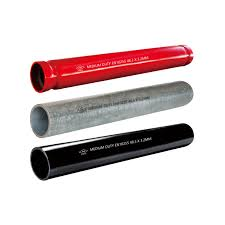
In modern construction, mechanical engineering, and infrastructure development, piping systems must meet strict quality and safety requirements. One of the most widely recognized specifications in Europe is EN 10255, a standard that defines non-alloy steel tubes designed for welding and threading applications. These tubes are widely used in plumbing systems, heating installations, gas distribution networks, and industrial piping structures where durability and reliability are critical.
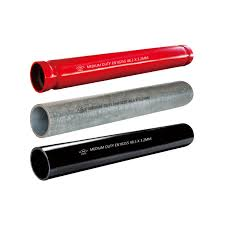
The importance of EN 10255 lies in its ability to ensure uniform quality across steel tube production. Engineers, contractors, and manufacturers depend on this standard to guarantee that pipes deliver consistent mechanical strength, dimensional accuracy, and long-term performance under different environmental conditions.
EN 10255 Steel Tube Specifications and Manufacturing Quality Standards in Industrial Applications
The en 10255 specification applies to non-alloy steel tubes intended for welding and threading. These tubes are produced in different series, typically categorized as light, medium, and heavy depending on wall thickness and pressure resistance capacity. Each category is designed for specific applications, allowing engineers to choose appropriate tubing based on system requirements.
A key feature of this standard is its strict dimensional control. Steel tubes manufactured under EN 10255 must meet precise requirements for outer diameter, wall thickness, and straightness. This ensures compatibility with fittings, couplings, and threaded connections used in piping systems. Accurate dimensions reduce installation errors and improve overall system reliability.
Mechanical properties are another critical aspect of this standard. EN 10255 defines minimum values for tensile strength, yield strength, and elongation to ensure that steel tubes can withstand pressure, mechanical stress, and temperature variations. This makes them suitable for low and medium-pressure systems commonly found in residential and industrial installations.
Surface condition is also an important factor in performance. Steel tubes can be supplied in black steel or galvanized finishes. Galvanized tubes are coated with zinc, which provides strong protection against corrosion and rust formation. This makes them ideal for outdoor installations, humid environments, and long-term infrastructure projects where maintenance access is limited.
Manufacturing processes under this standard involve hot forming, welding, and finishing techniques that ensure structural integrity and consistent quality. Welded tubes are produced using advanced welding technology that maintains seam strength and prevents weak points. This ensures that the tubes perform reliably even under continuous pressure and operational stress.
EN 10255 Applications in Plumbing Systems, Heating Networks, and Industrial Pipe Installations
The applications of EN 10255 steel tubes are extensive and span across multiple industries. In plumbing systems, these tubes are commonly used for water distribution in residential, commercial, and industrial buildings. Their ability to handle moderate pressure and temperature variations makes them suitable for both hot and cold water supply systems.
In heating installations, EN 10255 steel tubes are widely used in radiator systems, central heating networks, and boiler connections. Their thermal stability and mechanical strength allow them to perform efficiently under continuous temperature changes. This makes them a preferred choice in hospitals, hotels, and large commercial buildings where heating reliability is essential.
Gas distribution systems also depend heavily on EN 10255 steel tubes. The threaded design and strong structural properties ensure secure connections, reducing the risk of leakage in natural gas and LPG systems. Safety is a major concern in gas transport, and compliance with this standard helps maintain long-term operational security.
Industrial applications include compressed air systems, fire protection pipelines, and mechanical engineering structures. In such environments, pipes must withstand continuous pressure and mechanical loads without failure. EN 10255 steel tubes provide the required strength and durability for these demanding conditions.
Infrastructure projects such as water treatment plants, irrigation networks, and energy facilities also rely on these tubes. Their standardized design ensures compatibility with international fittings and systems, making them suitable for large-scale global engineering projects.
EN 10255 Material Properties and Performance Reliability in Modern Steel Tube Engineering
The quality of EN 10255 steel tubes depends on carefully controlled material composition and manufacturing precision. These tubes are typically made from non-alloy steel grades that offer a balance of strength, flexibility, and weldability. The controlled chemical composition ensures consistent performance across different production batches.
Manufacturing methods include hot rolling and cold finishing processes that enhance both structural strength and surface quality. Hot forming provides durability, while cold finishing improves dimensional accuracy and surface smoothness. These combined techniques ensure that the tubes meet strict engineering requirements.
Quality testing is an essential part of production. Each batch undergoes hydrostatic pressure testing to ensure leak resistance, ultrasonic inspection to detect internal flaws, and dimensional verification to confirm compliance with EN 10255 standards. These tests ensure safety and reliability in real-world applications.
Corrosion resistance is another important performance factor. Galvanized EN 10255 tubes are coated with zinc to protect against rust and environmental damage. This significantly extends service life, especially in outdoor and underground installations where exposure to moisture is unavoidable.
Another advantage of this standard is compatibility with threaded fittings and mechanical connections. EN 10255 tubes are designed to integrate seamlessly into existing piping systems, reducing installation time and improving efficiency in construction and maintenance projects.
Conclusion Importance of EN 10255 Standard in Global Engineering and Infrastructure Development
The EN 10255 standard plays a crucial role in ensuring safety, reliability, and consistency in steel tube applications across plumbing, heating, gas distribution, and industrial systems. Its strict requirements for material quality, mechanical strength, and dimensional precision make it a trusted specification in modern engineering.
As infrastructure development continues to expand globally, the demand for standardized and durable piping systems continues to grow. EN 10255 provides a reliable framework that supports long-lasting performance and operational safety across diverse applications.

