English
 Arabic
 French
 Spanish
 Portuguese
 Deutsch
 Turkish
 Dutch
Dutch
 Italiano
 Russian
 Romaian
 Portuguese (Brazil)
 Greek
Greek
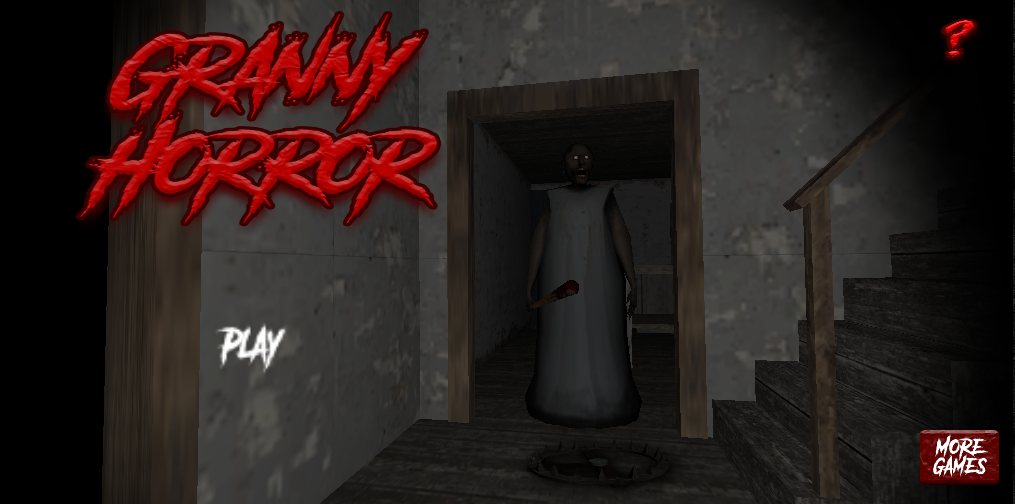
Introduction to Granny Horror Experience
Granny is a survival horror game that focuses on stealth, puzzle solving, and escape mechanics inside a locked house environment. The player wakes up trapped inside a dangerous location and must find a way to escape while avoiding a hostile character that reacts to sound and movement. The entire experience is designed to create tension through limited resources, unpredictable enemy behavior, and tight exploration spaces.
The core appeal of this game comes from its combination of simplicity and fear based gameplay. There are no complex combat systems, instead the challenge is built around silence, timing, and careful planning. Every action can lead to danger, which makes each decision important.
Core Gameplay Structure and Survival Objective
The main objective in Granny game is to escape the house while avoiding detection. The environment is divided into multiple rooms, secret areas, and locked sections that require keys, tools, and puzzle solving. Each item collected has a specific function that contributes to the escape process.
The survival system is based on stealth mechanics. The hostile character responds to sound, so dropping objects, walking on creaky floors, or opening doors without caution can lead to immediate danger. The player must learn how to move slowly, hide under furniture, and use distraction techniques to survive longer.
The game also includes multiple escape routes. These routes require different combinations of items, such as keys, pliers, hammer, or code inputs. This structure increases replay value because each attempt can lead to a different strategy.
Environment Design and House Exploration
The house environment in Granny game is designed as a maze like structure filled with interconnected rooms. Each area has a specific purpose, such as storage spaces, hidden basements, or locked rooms containing essential tools.
Exploration is risky because visibility is limited and danger can appear suddenly. The layout encourages memorization, so players gradually learn safe paths and item locations. Over time, the house becomes more predictable, but the tension remains due to enemy movement patterns.
Sound plays a major role in exploration. Certain floors produce noise, doors can alert danger, and dropped objects can create distractions. Understanding sound behavior is essential for efficient navigation.
Hidden passages and secret rooms are also part of the environment design. These areas often contain important items or provide temporary safety. However, staying too long in one place increases risk because enemy patrol routes are unpredictable.
Enemy Behavior and Artificial Intelligence Design
The main antagonist in Granny game follows a dynamic AI system that reacts to player actions. Movement patterns are not fully scripted, which creates unpredictability during gameplay. The character can investigate sounds, patrol rooms, and appear suddenly in unexpected locations.
The AI behavior encourages stealth over confrontation. Direct interaction leads to failure, so avoidance becomes the primary strategy. The enemy can also set traps and respond to changes in the environment, increasing difficulty as the game progresses.
Hiding mechanics are essential for survival. Players can hide under beds, inside wardrobes, or behind objects. However, hiding is not always safe because the enemy may check hiding spots randomly, forcing players to time their actions carefully.
The difficulty increases as players progress through days or attempts. The enemy becomes faster, more sensitive to sound, and more aggressive in searching areas where player activity was detected.
Puzzle Mechanics and Item Collection System
Puzzle solving is a central part of Granny game progression. Players must collect items scattered throughout the environment and use them in specific locations. Each item has a role in unlocking new areas or enabling escape paths.
Keys are used to open locked doors and access restricted zones. Tools such as hammers, screwdrivers, and cutters are used to remove barriers or disable security elements. Some puzzles require combination codes that must be found through exploration and observation.
Item placement is randomized in many gameplay sessions, which prevents memorization of exact locations. This randomness increases replayability and forces adaptive thinking.
Players must also manage inventory space and prioritize items based on current objectives. Carrying unnecessary items can slow progress and increase risk exposure.
Strategy for Survival and Stealth Progression
Successful gameplay in Granny game depends on patience and awareness. Running or rushing often leads to detection, so slow movement is essential. Players must listen carefully for audio cues that indicate enemy proximity.
Planning routes before moving is a key survival technique. Understanding which areas are safe and which paths are risky allows more efficient exploration. Backtracking should be minimized because it increases exposure to danger.
Distraction techniques are also useful. Throwing objects can lure the enemy away from important areas, creating temporary safe zones. However, these tactics must be used carefully because overuse can lead to unpredictable enemy responses.
Saving progress is limited in some versions of the game, so each decision carries long term consequences. This increases tension and encourages careful gameplay instead of trial and error rushing.
Game Atmosphere and Horror Elements
The horror design in Granny game relies heavily on psychological tension rather than visual intensity. The environment is quiet, empty, and filled with subtle sound effects that create constant uncertainty. Every small noise increases anxiety because it may indicate danger.
Lighting is dim and often inconsistent, making navigation more difficult. Shadows and dark corners are used to hide both items and threats, increasing suspense during exploration.
The unpredictability of enemy movement adds to the fear factor. Players never fully know where danger is located, which creates a constant sense of vulnerability.
Sound design is one of the strongest elements of the game. Footsteps, door creaks, and distant noises contribute to a feeling of being watched at all times.
Advanced Tips for Better Performance
Improving performance in Granny game requires understanding patterns and optimizing movement. Learning common item spawn zones helps reduce search time during early gameplay. Memorizing safe hiding spots improves survival chances during emergencies.
It is important to stay aware of multiple escape strategies instead of focusing on only one path. Flexibility allows adaptation when items are not located in expected areas.
Players should also practice controlled movement. Moving only when necessary and avoiding unnecessary noise reduces detection risk significantly.
Observation is another key skill. Watching enemy movement cycles helps identify safe windows for exploration and item collection.
Conclusion and Long Term Replay Value
Granny offers a unique survival horror experience built around stealth mechanics, puzzle solving, and unpredictable enemy behavior. The game continues to attract players due to its simple controls combined with deep strategic gameplay.
The combination of randomized item placement, dynamic artificial intelligence, and multiple escape routes ensures high replay value. Each attempt feels different, encouraging experimentation and improved strategy development.
Overall, the game delivers a tense and engaging horror experience where survival depends on patience, awareness, and careful decision making.