 English
 Arabic
 French
 Spanish
 Portuguese
 Deutsch
 Turkish
 Dutch
Dutch
 Italiano
 Russian
 Romaian
 Portuguese (Brazil)
 Greek
Greek
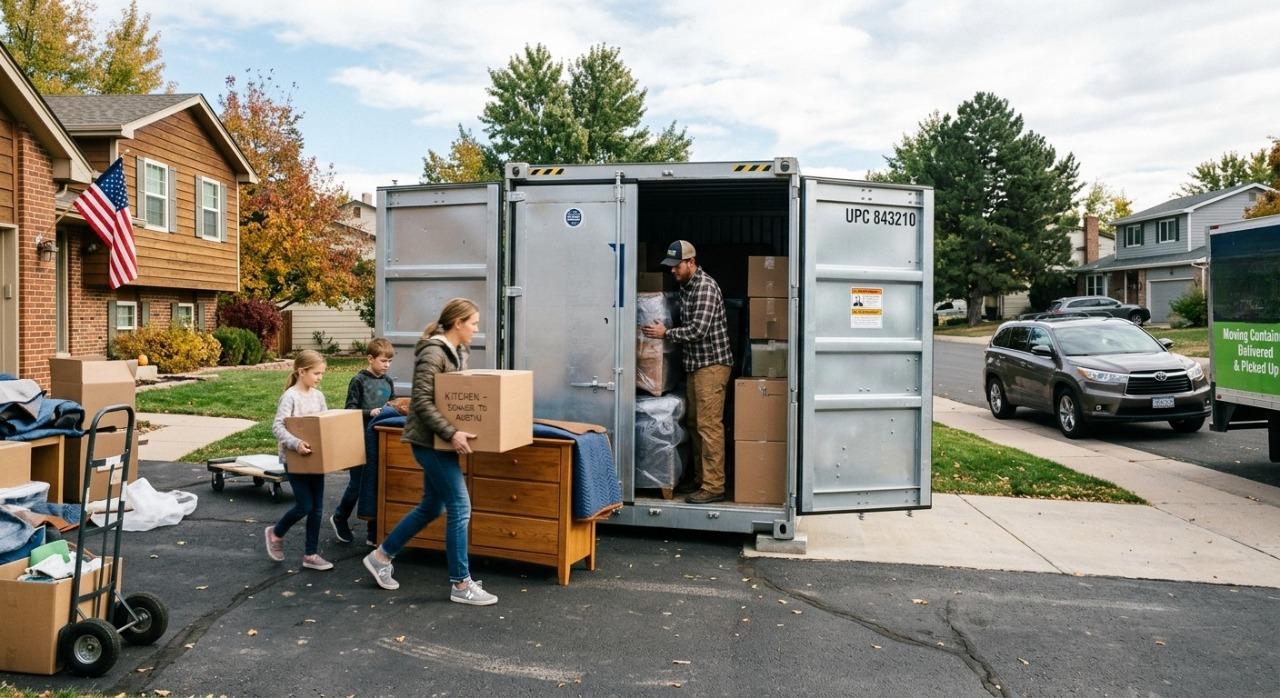
Moving long-distance can feel like a huge project, especially when you’re trying to pack, transport, and unload everything on a tight schedule. One option that has become increasingly popular is using a moving container. Instead of loading all your belongings into a moving truck on one day, a portable container can give you more flexibility during the moving process.
Understanding PODS moving costs, container sizes, transportation fees, loading options, and storage charges can help you create a realistic moving budget.
Whether you’re moving across several states or relocating to another part of the country, knowing how moving containers work can make the process easier and more predictable.
What Is a Moving Container?
A moving container is a portable storage unit designed to help people move their belongings. Instead of placing everything directly into a moving truck, you load your household items into the container.
The container is then picked up and transported to your new location. Depending on the service you choose, it may also be stored temporarily at your home or at a storage facility.
This approach is different from a traditional full-service move. With traditional movers, a crew usually arrives, packs or loads your belongings, drives them to your destination, and unloads them.
With a moving container, you generally have more control over the loading and unloading schedule.
Why Are Moving Containers Popular?
Moving containers can be useful for people who:
- Need extra time to pack
- Want temporary storage
- Prefer flexible moving dates
- Are handling a DIY move
- Want to avoid driving a large rental truck
- Need a solution for long-distance relocation
The biggest attraction is flexibility. You don't necessarily have to complete your entire move in a single day.
How Do Moving Containers Work?
The basic process is fairly straightforward.
First, you order a container based on the size of your move. The company delivers the container to your property. You then load your furniture, boxes, appliances, and other household belongings.
After you've finished loading, the company picks up the container and transports it to the destination.
At the new property, the container is delivered again. You unload your belongings, and the company eventually collects the empty container.
The Basic Process
- Reserve your container
- Choose a delivery date
- Receive the container
- Pack and load your belongings
- Schedule transportation
- Container travels to the destination
- Unload your belongings
- Container is collected
This process can be particularly helpful when your moving dates aren't perfectly aligned.
For example, you might move out of an apartment on June 1 but not receive the keys to your new home until June 10. Instead of rushing to coordinate two locations, you may be able to use container storage during the gap.
Step 1: Ordering Your Moving Container
The first step is selecting a provider and requesting a quote.
You'll usually need to provide information about your current address, destination, estimated household size, and preferred delivery dates.
Some companies allow you to request pricing online, while others may require additional information before giving you an estimate.
What Information Should You Prepare?
Before requesting a quote, make a basic inventory of your belongings.
Include:
- Beds
- Sofas
- Dining tables
- Chairs
- Appliances
- Dressers
- Electronics
- Boxes
- Outdoor furniture
- Large household items
You don't need a perfect inventory at this stage. However, having a reasonable estimate can help the provider determine what container size you'll need.
A moving directory such as My Good Movers can also be useful when researching professional moving companies for loading, unloading, transportation, or other moving services.
Step 2: Choosing the Right Container Size
Choosing the correct container size is one of the most important parts of the process.
A container that's too small can create a major problem because you may need another unit. A container that's unnecessarily large could increase your expenses.
Common Household Considerations
A studio apartment may require significantly less space than a four-bedroom house.
Here's a simple planning guide:
| Household | Typical Consideration |
|---|---|
| Studio | Small container or limited belongings |
| 1-bedroom | Small to medium container |
| 2-bedroom | Medium container |
| 3-bedroom | Medium to large container |
| 4-bedroom | Large container or multiple units |
| Large household | Multiple containers may be needed |
These are general planning guidelines rather than guaranteed container capacities. Furniture size, packing methods, and the amount of belongings can make a major difference.
Measure Before You Reserve
Take measurements of large furniture pieces.
If you have a large sectional sofa, oversized dining table, multiple wardrobes, or bulky outdoor equipment, estimate the space they will occupy before choosing a container.
It's better to plan carefully than discover halfway through loading that you don't have enough room.
Step 3: Loading the Container
Once the container arrives, you'll normally have time to load your belongings.
This is where moving preparation really matters.
Start with heavy items such as appliances and large furniture. Place lighter boxes toward the top when appropriate, while making sure everything is packed securely.
Smart Loading Tips
Follow these basic principles:
- Put heavy items on the bottom.
- Use sturdy boxes.
- Fill empty spaces where practical.
- Protect furniture with moving blankets.
- Disassemble large furniture when appropriate.
- Keep fragile items properly cushioned.
- Don't overload boxes.
- Label important boxes clearly.
You should also avoid creating unstable stacks.
A container may be transported over a long distance, so your belongings need to be packed and secured with transportation in mind.
Step 4: Transporting the Container
After loading is complete, the container is picked up for transportation.
The company handles the transportation portion according to the service agreement.
This can be convenient because you don't have to drive a large moving truck yourself.
For long-distance relocations, transportation costs can represent a significant part of the total price.
The distance between your current home and your destination, route availability, fuel expenses, container availability, and timing can all influence your final quote.
Step 5: Using a Container for Storage
One of the biggest differences between moving containers and traditional moving trucks is the storage option.
A moving container can sometimes serve as temporary storage during a transition.
For example, imagine that you're selling your current home before purchasing another property. Your belongings may need somewhere to stay for a few weeks.
A container-based service may allow you to store your possessions during that period.
When Storage Can Help
Temporary storage may be useful when:
- Your closing dates don't match.
- You're renovating your new home.
- You're moving into temporary housing.
- You're downsizing.
- You're relocating for work.
- You're waiting for another property to become available.
However, storage fees can increase your overall moving budget, so make sure you understand how long the storage period lasts and how additional days are charged.
Understanding PODS Moving Costs
PODS moving costs can vary significantly depending on your situation.
There isn't one universal price because every move is different.
The final cost can depend on:
- Distance
- Container size
- Number of containers
- Delivery fees
- Pickup fees
- Transportation
- Storage duration
- Location
- Moving dates
- Additional services
- Loading or unloading assistance
Because of these variables, it's better to request a personalized quote rather than rely on a single advertised price.
What Does the Price Usually Include?
Depending on the provider and package, your quote may include several different components.
| Cost Component | What It Means |
|---|---|
| Container delivery | Bringing the container to your property |
| Container rental | Using the container for the agreed period |
| Transportation | Moving the container to another location |
| Storage | Keeping belongings for an additional period |
| Pickup | Removing the container |
| Labor | Optional professional loading or unloading |
| Extra services | Additional moving-related assistance |
Always read the quote carefully. A low starting price doesn't necessarily represent the final cost of your complete move.
What Factors Affect PODS Moving Costs?
Several factors can change the price of a container move.
Moving Distance
Longer moves generally involve more transportation. A move across several states may cost more than a local relocation.
Container Size
Larger containers may cost more than smaller ones.
Storage Time
If you keep the container for additional weeks or months, your total cost may increase.
Moving Season
Demand can influence pricing. Moving during particularly busy periods may affect availability and rates.
Location
The cost and availability of container services can vary by market.
Labor Services
Some people load containers themselves. Others hire professionals for loading and unloading.
If you need labor, include those costs in your moving budget.
Moving Containers vs. Traditional Moving Companies
Moving containers aren't the only option for a long-distance move.
Traditional full-service movers can handle much of the physical work for you.
Here's a general comparison:
| Feature | Moving Container | Full-Service Movers |
|---|---|---|
| Packing | Usually DIY | Often available |
| Loading | Usually DIY or optional labor | Usually handled by crew |
| Transportation | Provider handles container | Moving company handles truck |
| Unloading | Usually DIY or optional labor | Usually handled by crew |
| Storage | Often available | Often available |
| Flexibility | Generally high | Depends on company |
| Physical effort | More customer involvement | Less customer effort |
Neither approach works exactly the same way.
A moving container may suit someone who wants more control over timing. Full-service moving may be more convenient for someone who wants professionals to handle most of the physical work.
Benefits of Using Moving Containers
Moving containers have several potential advantages.
Flexible Scheduling
You may have more time to pack instead of completing everything in a single day.
Convenient Storage
The same container can sometimes be used during the transition between homes.
Less Truck Driving
You don't have to operate a large moving truck over hundreds or thousands of miles.
More Control
You can organize your belongings according to your own schedule.
Useful for Complex Moves
Container moving can be helpful when your move involves temporary housing, renovations, delayed closings, or uncertain dates.
Potential Challenges of Moving Containers
Although containers offer flexibility, they're not perfect for every move.
Limited Space
A container has a fixed capacity. Poor packing can waste valuable space.
Customer Loading
If you load everything yourself, you'll need to invest time and physical effort.
Property Restrictions
Not every property has enough space for container delivery.
Driveways, narrow streets, parking restrictions, apartment rules, or homeowners association policies may affect placement.
Weather Exposure
Depending on the service and storage arrangement, weather protection should be considered. Use appropriate packing materials and ask the provider about container construction and protection.
Extra Fees
Additional storage, transportation changes, delivery attempts, or labor can affect the final bill.
How to Prepare for a Container Move
Good preparation can make the entire process smoother.
Start several weeks before moving day.
Create an Inventory
Write down your major belongings.
Declutter First
Don't pay to transport items you no longer need.
Sell, donate, recycle, or dispose of unwanted belongings before loading.
Gather Packing Supplies
You'll typically need:
- Moving boxes
- Tape
- Bubble wrap
- Furniture pads
- Stretch wrap
- Labels
- Markers
- Mattress covers
Create an Essentials Box
Keep important items separate.
Your essentials box might contain:
- Medications
- Chargers
- Important documents
- Basic toiletries
- Clothing
- Snacks
- Cleaning supplies
- Basic tools
This box should be easy to access when you arrive.
How to Compare Moving Services
Don't compare companies based only on the headline price.
Look at the complete service.
Consider:
- What is included?
- Are there additional fees?
- Is loading assistance available?
- Is unloading available?
- Is storage offered?
- What insurance or protection options are provided?
- How flexible are delivery dates?
- What happens if your schedule changes?
- Are there restrictions at your property?
- What do customers say about the service?
A moving directory can make this research process easier by giving consumers a starting point for comparing available moving companies.
Ways to Keep Container Moving Costs Under Control
A little planning can go a long way.
Declutter Before Packing
The less you move, the less space you need.
Compare Quotes
Get estimates from relevant providers instead of accepting the first price you see.
Pack Efficiently
Use boxes that are appropriately sized and stack them carefully.
Avoid Last-Minute Changes
Schedule your container early when possible.
Consider DIY Loading
If you're physically able and have enough time, loading your own belongings may reduce labor expenses.
Check Storage Terms
If you need storage, understand the daily or monthly pricing structure before committing.
Ask About All Fees
Ask for a breakdown of delivery, transportation, storage, pickup, and additional service charges.
Questions to Ask Before Booking
Before signing an agreement, ask the provider:
- How large is the container?
- How long can I keep it?
- What is included in the quoted price?
- How much does additional storage cost?
- Is transportation included?
- Are loading services available?
- Are unloading services available?
- What happens if my moving date changes?
- Are there delivery restrictions?
- How are damaged items handled?
- Are there cancellation fees?
Getting clear answers before moving day can prevent unpleasant surprises later.
Frequently Asked Questions
How do moving containers work for long-distance moves?
A moving container is delivered to your property so you can load your belongings. After loading, the provider transports the container to your destination. You then unload it, and the company collects the empty container.
Are PODS moving costs cheaper than traditional movers?
The answer depends on the specific move. Distance, container size, storage time, labor, location, and moving dates can all affect the total cost. A container may reduce some labor requirements, but customers should compare the complete cost of each option.
Can I use a moving container for storage?
Yes, moving containers can be used for temporary storage with participating providers. Storage arrangements and pricing vary, so check the provider's terms before booking.
How much can a moving container hold?
Capacity depends on the container's dimensions and the way you pack it. Household size alone doesn't determine the required space. Large furniture, appliances, and packing efficiency also matter.
Do I have to load the moving container myself?
Not always. Some providers offer loading and unloading assistance, while customers can also hire independent moving labor. Availability varies by location.
How far in advance should I book a moving container?
It's generally smart to plan early, particularly during busy moving periods. Early planning gives you more time to compare prices, confirm availability, and prepare your belongings.
Can I compare moving companies through My Good Movers?
Yes. My Good Movers is a moving directory that helps users research moving companies and moving-related services. It can be a useful starting point when you're comparing professional help for loading, unloading, transportation, or other moving needs.
What can increase PODS moving costs?
Longer distances, larger containers, additional storage, labor services, delivery requirements, and schedule changes can all affect the total price. Always review your complete quote before booking.
Are moving containers good for long-distance relocations?
They can be a practical option for people who want flexibility, temporary storage, and less responsibility for driving a large moving truck. However, the best approach depends on the customer's budget, schedule, property, and willingness to handle loading.
Conclusion
Moving containers offer a flexible alternative to traditional moving methods. Instead of completing the entire relocation in one day, you can often load your belongings at your own pace and use the container for transportation and, when needed, storage.
Understanding PODS moving costs is an important part of planning. Container size, distance, storage duration, delivery, labor, and additional services can all influence your final budget.
Before booking, compare the complete cost rather than focusing only on an advertised starting price. Check the service terms, ask about additional fees, and make sure the container can be delivered and picked up at both properties.
If you need professional help with loading, unloading, transportation, or other moving services, My Good Movers can also serve as a useful moving directory for researching and comparing available moving companies.
With careful planning, efficient packing, and a clear understanding of the costs involved, a long-distance container move can be organized into manageable steps instead of becoming a last-minute scramble.

