English
 Arabic
 French
 Spanish
 Portuguese
 Deutsch
 Turkish
 Dutch
Dutch
 Italiano
 Russian
 Romaian
 Portuguese (Brazil)
 Greek
Greek
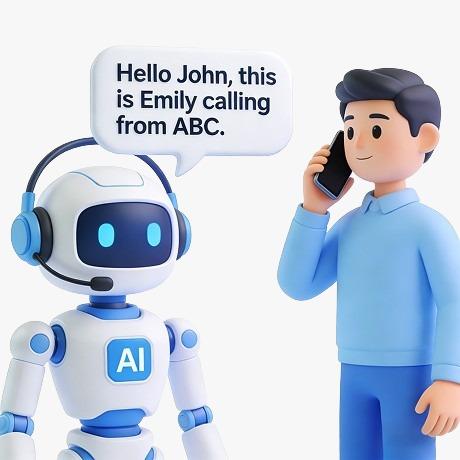
A few years ago, "automation" mostly meant simple rule-based tools — if a customer clicked this button, send that email. AI agents represent a genuinely different category. Instead of following a rigid script, they can understand context, make decisions within defined boundaries, and carry out multi-step tasks with far less human oversight than earlier automation tools ever required.
What an AI Agent Actually Is
An AI agent is a software system built on large language models that can understand a request, decide on a course of action, and execute tasks — often across multiple tools or systems — without a human manually directing every step. This distinguishes agents from simple chatbots, which mostly answer questions, or basic automation workflows, which only follow pre-set rules with no real understanding of context.
Customer Support Is Where Agents Are Making the Biggest Immediate Impact
Customer support teams field a high volume of repetitive questions — order status, return policies, account issues — alongside a smaller number of genuinely complex cases that need human judgment. AI agents are well suited to handling that first category directly, resolving straightforward requests instantly at any hour, while recognizing when a conversation needs to be escalated to a human agent rather than attempting to force a resolution it isn't equipped to give.
This division of labor tends to produce better outcomes than either extreme — a fully automated system that frustrates customers with complex problems, or a fully human team that's overwhelmed by simple, repetitive requests that don't need a person's judgment at all.
Streamlining Internal Business Workflows
Beyond customer-facing use cases, AI agents are increasingly handling internal processes: pulling information from multiple systems to answer an internal question, drafting first-pass responses to routine emails, or moving a task through several steps of an approval workflow. The value here isn't replacing the people involved — it's removing the manual, repetitive steps between decisions so employees spend more time on judgment calls and less on data entry.
Lead Qualification and Sales Support
Sales teams often lose time manually qualifying leads that were never going to convert. An AI agent can engage a new lead immediately, ask the right qualifying questions, check responses against defined criteria, and route only genuinely promising leads to a human salesperson — while providing that salesperson with a useful summary of the conversation so far, rather than a cold, empty lead.
Reducing the Burden of Repetitive Tasks
Every business has tasks that are necessary but repetitive: data entry, appointment scheduling, follow-up reminders, document processing. These tasks rarely require deep expertise, but they do require consistency, and they quietly consume hours that could otherwise go toward higher-value work. AI agents are particularly effective here because the task itself is well-defined, even if it involves several steps or multiple systems.
AI-Powered Communication at Scale
Agents can personalize communication at a scale that would be impractical for a human team to manage manually — following up with hundreds of customers individually rather than sending one generic mass email, adjusting tone and content based on where a customer is in their journey, and doing so consistently across every interaction rather than depending on which team member happens to be available that day.
Human and AI Collaboration, Not Replacement
The businesses seeing the strongest results tend to treat AI agents as a layer that handles volume and routine work, freeing human employees to focus on relationship-building, complex problem-solving, and decisions that genuinely benefit from human judgment. Framing this as collaboration rather than replacement also tends to produce smoother internal adoption, since employees can see the technology removing frustrating busywork rather than threatening their role outright.
Where Businesses Are Seeing Real Efficiency Gains
Practical use cases span nearly every department: support teams resolving routine tickets instantly, sales teams qualifying leads around the clock, operations teams automating multi-step internal processes, and marketing teams personalizing outreach without manually managing every individual message. The common thread across all of these is well-defined, repeatable tasks that previously consumed disproportionate amounts of staff time.
What to Consider Before Implementing AI Agents
Adopting AI agents isn't simply a matter of turning on a tool. It requires clearly defining what the agent should and shouldn't handle, integrating it properly with existing systems, and building in oversight so it can escalate appropriately rather than attempting to handle situations it wasn't designed for. Businesses that skip this planning stage often end up with an agent that creates as much friction as it removes, while those that invest in proper setup and testing tend to see a smoother rollout and faster, more reliable returns.
Getting Started the Right Way
Because implementation quality has such a direct effect on outcomes, many businesses choose to work with a specialized team rather than attempting a fully in-house build on their first attempt. Working with an experienced provider of AI agent development services in USA can shorten that learning curve considerably, helping a business define the right scope, integrate with existing tools correctly, and avoid the common early mistakes that undermine an otherwise promising automation project.
AI agents are still a relatively new category of business tool, but the direction is already clear: routine, well-defined work is increasingly handled by systems that can act with real context and judgment, while people focus on the parts of the job that genuinely need them.
Lázaro Ramos - New Film 'Mais Que Irmãos' Explores Friendship
Games |
2026-02-26 04:36:44