 English
 Arabic
 French
 Spanish
 Portuguese
 Deutsch
 Turkish
 Dutch
Dutch
 Italiano
 Russian
 Romaian
 Portuguese (Brazil)
 Greek
Greek
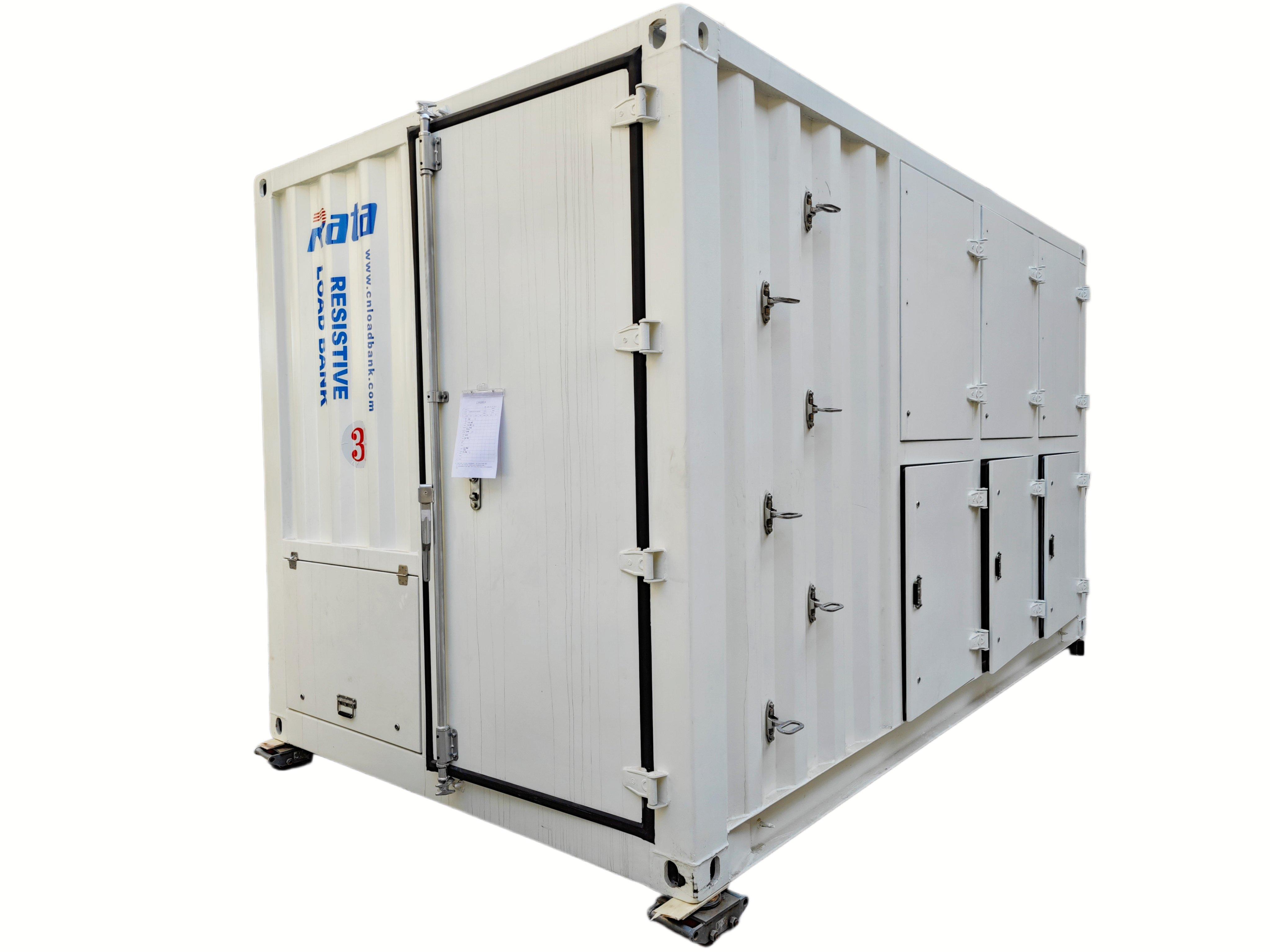
Hyperscale data centers operate at power levels where even small inefficiencies can turn into real performance problems. Testing backup systems, generators, and broader power infrastructure is routine work in these facilities, but the type of load bank used for that testing has a direct effect on how accurate and reliable the results actually are.
Why the Cooling Method Matters at This Scale
The differences between traditional air-cooled equipment and liquid cooled load banks go well beyond how each removes heat. Each approach carries its own strengths and limitations, and those differences become considerably more consequential in high-density environments like hyperscale facilities, where understanding them properly helps businesses plan for growth rather than run into limitations later.
How Hyperscale Environments Change the Testing Equation
Hyperscale facilities aren't typical data centers — they run at extremely high power densities, often continuously, which leaves very little margin for error in heat removal or airflow. Any inefficiency here has a way of multiplying across systems as a facility scales, which is exactly why the choice between cooling methods matters more as size increases rather than less. Concentrated heat generation during testing can overwhelm air-cooled systems, particularly when several units are being tested simultaneously, while liquid-cooled equipment handles that concentration more effectively thanks to its higher heat absorption capability — and because hyperscale facilities rarely shut down, testing has to happen without interrupting ongoing operations, which calls for load banks that hold stable temperatures over genuinely long periods.
Where the Two Cooling Approaches Actually Diverge
Air-cooled load banks rely on fans to move heat away from resistive elements — a simple, widely used design that runs into real limitations at hyperscale, where the volume of hot air produced adds noticeable strain to facility cooling systems over time. Liquid cooling load banks instead use fluid to absorb and carry away heat, transferring it considerably faster than air and holding stable temperatures even under heavy, sustained loads. At lower power levels both approaches perform reasonably well, but the gap widens as demand increases — liquid cooling maintains its efficiency where air-cooled systems tend to lose ground to heat buildup.
The Ripple Effect on the Surrounding Facility
Load testing never happens in isolation — it affects temperature, airflow, and working conditions throughout the surrounding space. Air-cooled systems release hot air directly into the environment, adding to the building's overall cooling demand, while liquid-cooled systems move heat through a controlled circuit instead, helping maintain more stable conditions for everything else nearby. The large fans air-cooled systems rely on also generate real noise, which can affect working conditions for staff in a hyperscale facility, whereas liquid-cooled equipment runs considerably quieter and tends to have a smaller footprint, which matters in facilities where every bit of space is already spoken for.

Weighing Maintenance and Long-Term Cost
Air-cooled systems are simpler and can require less maintenance, though they still face wear-related issues like fan degradation and dust buildup. Liquid-cooled systems need regular monitoring of coolant and components, but modern designs from an established liquid cooled load banks manufacturer keep that maintenance manageable. On cost, air-cooled equipment tends to carry a lower upfront price thanks to its simpler design, while liquid-cooled systems ask for a higher initial investment due to components like pumps and heat exchangers — an investment that tends to pay off through lower operating costs over time, since liquid cooling doesn't add the same ongoing burden to facility cooling infrastructure that air-cooled testing does.
Making the Call for Hyperscale Environments
For facilities weighing their options, three points tend to matter most: liquid cooling offers stronger thermal control in high-density setups without pressuring facility cooling infrastructure, it reduces the environmental impact of testing inside the facility by keeping heat contained to a controlled loop, and it supports more stable performance across extended testing cycles where interruptions simply aren't an option. Those factors are usually what push hyperscale operators toward a trusted liquid cooling load banks manufacturer when it's time to upgrade or scale their testing infrastructure.


