 English
 Arabic
 French
 Spanish
 Portuguese
 Deutsch
 Turkish
 Dutch
 Italiano
 Russian
 Romaian
 Portuguese (Brazil)
 Greek
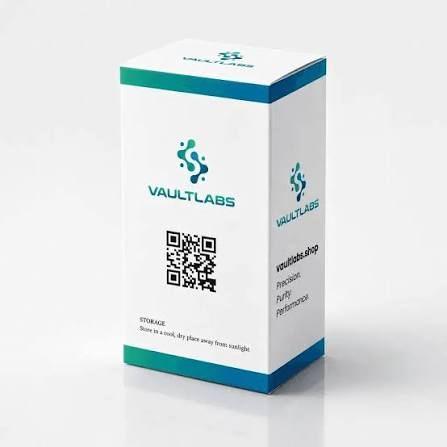
Information That Supports Good Research
Clear product information is the foundation of reliable research. When laboratories receive a 50mg vial of GHK-Cu, they need to understand exactly what they are working with, how it was characterised, and how it should be stored and handled. This article explains the key information researchers should review and record when working with the 50mg format. VaultLabs supplies GHK-Cu intended strictly for laboratory and in-vitro research, supported by research-focused product information.
Reading the Product Label
The product label is the first source of information. It should clearly identify the compound, quantity, batch or lot number, and research-only intended use. Researchers should check that label details match the order and accompanying documentation. Any discrepancies should be reported before use. Recording label information in laboratory records ensures traceability. Clear labelling also helps prevent mix-ups in laboratories handling multiple compounds, supporting safe and organised workflows.
Interpreting the Certificate of Analysis
A certificate of analysis provides important quality data. For GHK-Cu, it typically includes purity measured by high-performance liquid chromatography and identity confirmation by mass spectrometry. Researchers should check that the certificate corresponds to the batch received and that reported values meet experimental requirements. Understanding how to read chromatograms and mass spectra adds confidence. Keeping the certificate with laboratory records supports reproducibility and accurate reporting in research outputs.
Visual and Physical Checks
Simple visual checks can complement documentation. GHK-Cu is generally a blue powder, and solutions are typically blue. Unexpected colour, clumping, or signs of moisture may indicate storage or handling issues and should be noted. While visual checks cannot replace analytical verification, they provide a quick first assessment. Recording observations at receipt and during use helps laboratories track material condition and identify potential problems early.
Batch Consistency for Ongoing Studies
For research extending beyond a single vial, batch consistency becomes important. When reordering, researchers should compare new documentation with previous batches to confirm similar purity and identity. Recording batch numbers for each experiment allows researchers to identify whether batch differences could explain variations in results. Planning reorders before supplies run out helps maintain continuity. Attention to batch consistency strengthens the reliability of long-term studies.
Storage and Shelf Life Information
Storage information guides how researchers preserve the material. Lyophilised GHK-Cu should be stored in cool, dry conditions away from light, according to provided guidance. Researchers should note recommended storage durations and plan usage accordingly. Once reconstituted, solutions may have shorter stability windows, so aliquoting and appropriate storage are recommended. Following storage information carefully helps ensure the 50mg vial remains suitable for research throughout its use.
Using Information Responsibly
Product information supports good science, but it must be used within a responsible framework. GHK-Cu supplied for research is intended for laboratory and in-vitro use only and is not approved for human or veterinary use. Researchers in the UAE must comply with national regulations and institutional policies. For laboratories seeking GHK-Cu 50mg UAE supply with clear research-focused information, VaultLabs supports careful, well-documented, and responsible laboratory work.



