 English
 Arabic
 French
 Spanish
 Portuguese
 Deutsch
 Turkish
 Dutch
 Italiano
 Russian
 Romaian
 Portuguese (Brazil)
 Greek
Many people finish building their family through IVF and then face a question they never expected: what should happen to the embryos still in storage? At the same time, other families are hoping for a path to pregnancy that does not require creating new embryos from scratch. Embryo donation in Canada connects these two groups. This guide explains how the process works from both sides, what Canadian law says, and what to expect whether you are donating embryos or hoping to receive them.
Quick Answer
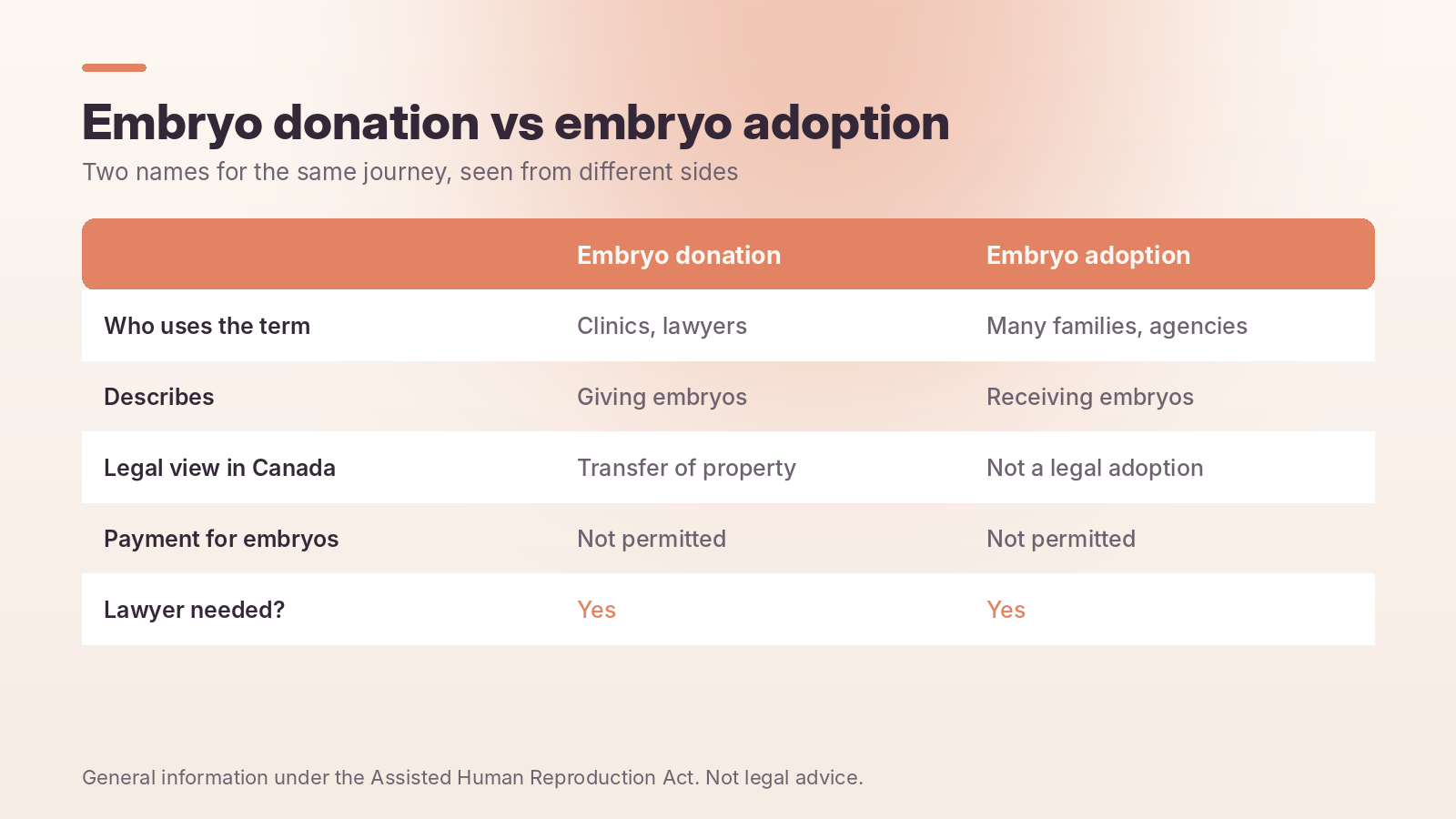
Embryo donation in Canada is the process of giving surplus embryos created during IVF to another person or couple so they can try to have a baby. It is legal, but it is illegal to buy or sell embryos under the Assisted Human Reproduction Act. In Canada, receiving embryos is legally treated as a transfer of property rather than a legal adoption, so both sides should work with a fertility lawyer, a fertility clinic and a counsellor.
What Is Embryo Donation?
Embryo donation is the transfer of embryos created by one family during fertility treatment to another person or couple who will use them to try to conceive. The donating family no longer plans to use the embryos, and the receiving family hopes to carry a pregnancy, either personally or through a gestational surrogate.
Embryos available for donation are usually frozen embryos left over after a family’s IVF treatment is complete. They may have been created with the donating parents’ own eggs and sperm, or with donor eggs or sperm.
For many donors, choosing embryo donation is a way to give their embryos a chance at life while helping another family. For many recipients, it can be a meaningful and often more affordable path compared with starting a full IVF cycle.
Embryo Donation Canada: What the Law Says
The Assisted Human Reproduction Act (AHRA) governs embryo donation across the country. A few key points:
-
It is illegal to purchase embryos, or to offer to purchase them.
-
Donors may be reimbursed only for receipted, out-of-pocket expenses directly related to the donation, under the Reimbursement Related to Assisted Human Reproduction Regulations in force since June 2020.
-
Every reimbursement requires receipts and a signed, dated declaration, and records must be kept for six years.
Importantly, embryo “adoption” in Canada is legally treated as a transfer of property, not a legal adoption. That has real implications for how agreements are written and how parentage is established. Because parentage rules vary by province, it is essential to get independent legal advice from a fertility lawyer and medical guidance from your fertility clinic.
Donating Embryos in Canada: What Donors Can Expect
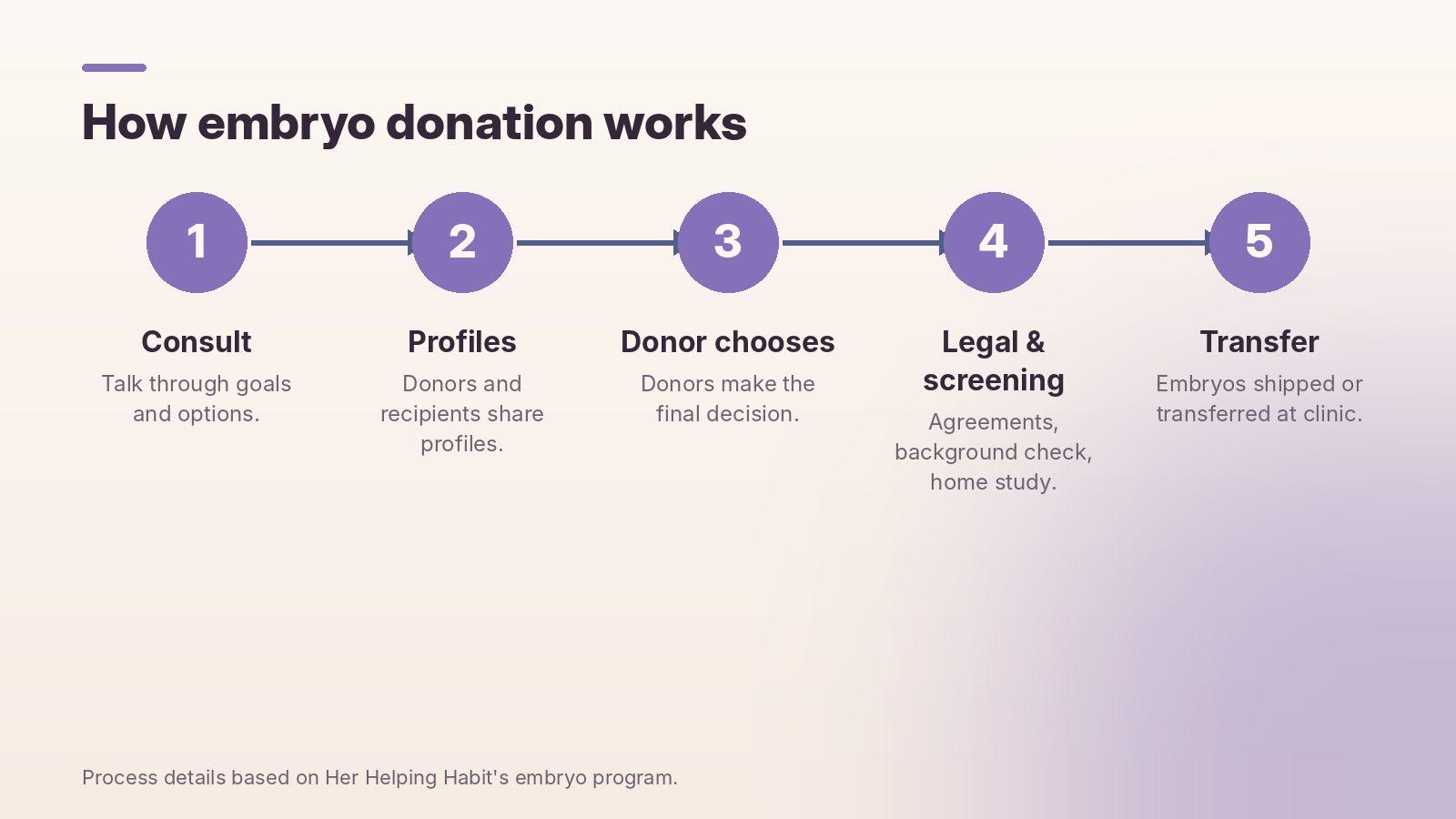
If you are considering donating embryos in Canada, you are likely weighing a mix of practical and emotional factors. Here is how the process typically works.
-
Reflect and talk it through. Many families take time to decide. Counselling can help you think about how you would feel knowing genetic siblings of your children may be raised in another family.
-
Connect with a program. Agencies and some clinics help match donors with recipients. You will share information about the embryos, your family medical history and your hopes for future contact.
-
Review recipient profiles. In many programs, donors help choose who receives their embryos. At Her Helping Habit, embryo donors make the final choice after reviewing recipient profiles.
-
Agree on contact. You decide, together with the recipients, what kind of relationship you would like. Some families exchange updates, others prefer more contact.
-
Sign a legal agreement. Each side works with its own lawyer to set out ownership transfer, contact expectations and what happens to any remaining embryos.
-
Coordinate the transfer. The embryos are moved to the recipient’s clinic if needed. Shipping can usually be arranged.
Donors often appreciate knowing what will happen to embryos that are not used. At Her Helping Habit, all embryos go to the recipient, and any remaining embryos are returned to the original family once the recipient’s family is complete.
Receiving Donated Embryos: What Recipients Can Expect
For recipients, embryo donation can open a door that once felt closed. It is used by heterosexual couples, single parents and 2SLGBTQ+ families alike. The process usually includes:
-
An initial consultation to understand your goals and options.
-
A recipient profile that donors can review, describing who you are, your family and your values.
-
Screening steps. At Her Helping Habit, recipients complete a criminal background check and a home study. These steps help donor families feel confident about where their embryos are going.
-
Matching. Donor families review profiles and make the final decision.
-
Legal agreements that document the transfer and contact expectations.
-
Medical preparation with your clinic, followed by a frozen embryo transfer to you or a gestational surrogate.
Shipping embryos between clinics is available at the recipient’s cost. At Her Helping Habit, recipients also receive a 50% re-matching discount if there is no live birth, which can ease some of the financial and emotional pressure of trying again.
Embryo Donation vs Embryo Adoption: A Quick Note on Language
You will often see the terms used interchangeably. “Embryo donation” describes the act from the donor’s side and reflects the legal reality in Canada. “Embryo adoption” is a term many programs use because it captures the family-building intent and the screening steps, such as home studies, that resemble adoption.
The key point is this: in Canada, receiving embryos is not a legal adoption. It is treated as a transfer of property, which is why a fertility lawyer’s guidance on parentage is so important. Our companion article on embryo donation vs embryo adoption explores the terms in more depth.
Is Embryo Donation Right for You?
There is no single right decision about surplus embryos. Families may choose to keep them in storage, donate them to another family, donate them to research where available, or allow them to thaw. Each option is personal and deserves respect.
Questions that can help you decide include:
-
How do I feel about children who share genetics with my own being raised by another family?
-
What level of contact would feel comfortable for my family now and in the future?
-
How would I explain this decision to my children as they grow?
-
For recipients: how would we share our child’s origins with them?
Counselling for both donors and recipients can help bring these feelings into the open before any agreement is signed.
How Her Helping Habit Supports Embryo Donation
Her Helping Habit recruits embryo donors and supports recipients through its embryo donation and adoption program, alongside its known egg donation and surrogacy services. The agency was built from lived experience and focuses on transparency, education and human connection. Families can begin with a free 30-minute consultation with a coordinator, then complete a personal questionnaire and choose the programs that suit them. If you are curious about either side of the process, learn more about embryo donation Canada programs with Her Helping Habit and see whether it fits your goals.
Frequently Asked Questions
Is embryo donation legal in Canada? Yes. Embryo donation is legal in Canada, but buying or selling embryos is prohibited under the Assisted Human Reproduction Act. Donors can only be reimbursed for receipted, out-of-pocket expenses related to the donation.
Who decides which family receives the embryos? That depends on the program. At Her Helping Habit, the donating family makes the final choice after reviewing recipient profiles.
What happens to embryos the recipient does not use? Agreements should address this clearly. In Her Helping Habit’s program, any remaining embryos return to the original family once the recipient’s family is complete.
Do recipients become the legal parents? Because embryo donation is treated as a transfer of property in Canada, the steps to establish legal parentage depend on provincial rules. A fertility lawyer can explain what applies in your province.
Can donated embryos be shipped to another city? Yes, embryos can usually be shipped between clinics. With Her Helping Habit, shipping is available at the recipient’s cost.
Final Thoughts
Embryo donation in Canada offers a compassionate way forward for families with surplus embryos and for those hoping to grow their family. Whether you are donating embryos or receiving them, the process rests on clear legal agreements, honest conversations about contact and careful medical coordination. Take the time you need, ask questions, and lean on professionals who understand both the law and the emotions involved.



